



























The Challenge of Selecting the Correct Caulk or Sealant for Home Waterproofing
Whether sealing a tile tub surround, weatherproofing exterior window frames, or patching driveway expansion joints, choosing the right adhesive gap filler is critical for home maintenance. Homeowners and DIYers frequently encounter water leaks, drafts, and peeling finishes because they select the wrong material for the job. Using rigid interior caulk on shifting window frames causes cracks, while applying unpaintable silicone on interior baseboard trim leaves unsightly gaps that ruin paint lines. Sourcing a clear, material-specific comparison of elasticity, cure times, and surface compatibility is essential before starting any sealing project.
Furthermore, applying low-grade or non-moisture-resistant formulas in high-humidity bath zones can lead to mold accumulation, water intrusion behind drywall, and expensive structural repairs.
Why Mismatched Elasticity, Unpaintable Formulas, and Poor Prep Cause Seal Failures
Using the wrong caulk or sealant formula for your specific surface condition introduces several physical and financial bottlenecks:
-
Cracking on Shifting Surfaces: Standard acrylic latex caulk dries rigid with minimal flex; applying it to shifting exterior door frames or window joints causes it to split and break under temperature changes.
-
Paint Failure on Standard Silicone: Pure silicone sealants resist moisture completely but repel water-based latex paints, causing paint to bead up, peel, or fail to adhere.
-
Mold and Water Leakage Behind Fixtures: Using basic interior trim caulk around shower basins and kitchen sinks leads to rapid water penetration, subfloor rot, and mildew growth behind walls.
Settling for cracked joints, peeling paint lines, or water intrusion leads to energy loss, structural moisture damage, and repeated re-caulking chores.
The Solution: Understanding Elasticity, Cure Rates, and Specific Application Zones
The ultimate strategy for effective home sealing lies in matching your project’s moisture level, thermal movement, and paintability requirements with the proper compound. While “caulk” is generally designed for stationary, paintable interior trim and dry gaps, “sealant” contains higher silicone or synthetic polymers that deliver superior elasticity for high-moisture bath fixtures and exterior weatherproofing.
By selecting pure silicone for wet plumbing joints, acrylic latex with silicone for backsplashes, butyl rubber for exterior gutters, and expanding foam for deep structural gaps, homeowners ensure long-lasting, airtight, and waterproof seals.
Technical Overview: Caulk vs. Sealant Key Performance Factors
Understanding how flexibility, moisture tolerance, and paint adhesion differ between formulas helps prevent project errors.
| Comparison Category | Caulk (e.g., Acrylic Latex) | Sealant (e.g., Pure Silicone, Polyurethane) |
| Primary Material | Acrylic polymers, vinyl resins, latex | Silicone, butyl rubber, polyurethane |
| Flexibility / Elasticity | Rigid when cured; minimal expansion flex | High elasticity; stretches with joint movement |
| Water Resistance | Low to moderate; best for dry or low-moisture zones | Exceptional; 100% waterproof for wet zones |
| Paintability | Fully paintable with water-based latex paints | Generally unpaintable (requires paintable hybrid formulas) |
| Best Application Area | Interior wood trim, baseboards, crown molding | Showers, sinks, exterior windows, roofs, masonry |
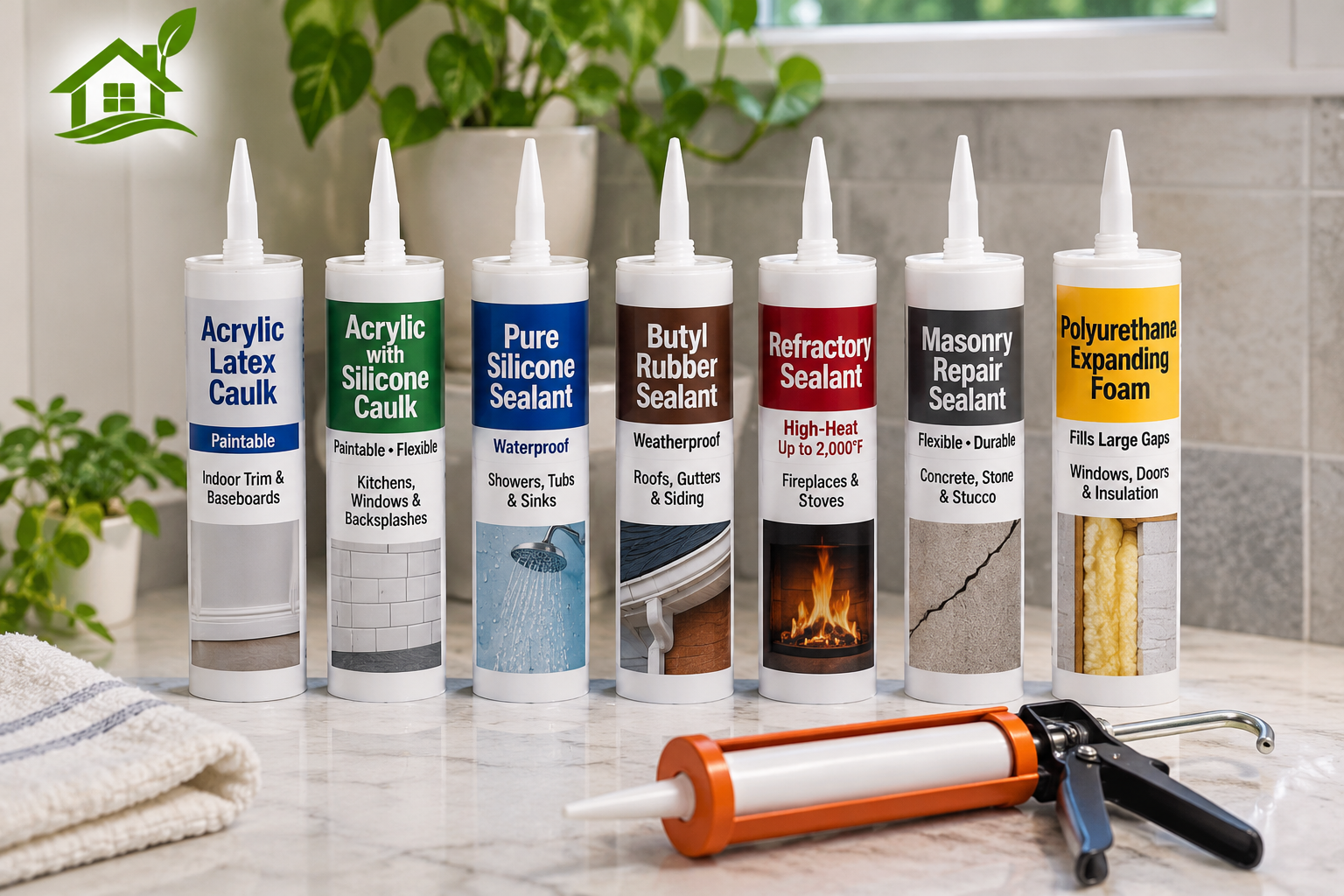
Technical Breakdown: 7 Types of Caulk & Sealant
-
01. Acrylic Latex Caulk: The go-to option for general interior wood trim, skirting boards, and drywall crown molding. Easy to smooth and apply, cleans up with water, and can be sanded and painted once cured. Best restricted to dry interior areas.

-
02. Latex or Acrylic Caulk with Silicone: Formulated by adding silicone polymers to latex caulk to enhance flexibility and moisture resistance. Ideal for moderate-moisture zones like kitchen tile backsplashes, window casing perimeters, and baseboard-to-tile transitions.

-
03. Pure Silicone Sealant: The gold standard for high-moisture plumbing environments (showers, bathtubs, glass tile seams, and vessel sinks). Flexible, mold-resistant, and non-shrinking. Clean-up requires chemical solvents; cannot be painted over.

-
04. Butyl Rubber Sealant: An elastomeric exterior sealant formulated specifically for metal roofs, rain gutters, siding joints, and masonry. Provides high stretch capacity to accommodate structural expansion and contraction during weather changes.

-
05. Refractory Sealant: Specialized high-heat compound engineered to withstand extreme temperatures. Designed exclusively for minor seam repairs and small gaps between firebrick in fireplace fireboxes and stove flues.

-
06. Masonry Repair Sealant: A textured, flexible caulk formulated with synthetic resins and fine stone aggregates. Used for filling cracks, control joints, and expansion gaps in outdoor concrete driveways, walkways, and stucco walls.

-
07. Polyurethane Expanding Foam Sealant: Aerosol-dispensed expanding foam engineered to fill large voids and structural gaps up to 1 inch wide. Ideal for weatherproofing window and door rough openings, insulating around utility wall penetrations, and deadening sound.

Recommended Sealing Zone Guide
-
Kitchens & Bathrooms: Pure silicone sealant for tub surrounds, shower pans, and sink basins; acrylic latex with silicone for kitchen backsplashes and toilet base perimeters.
-
Windows, Doors & Exterior Siding: Weatherproof silicone or silicone-latex hybrid caulk for exterior window perimeters; paintable acrylic latex for interior window casing and door trim.
-
Roofing, Gutters & Foundation Gaps: Butyl rubber sealant for gutter seams and metal flashing; masonry sealant for concrete cracks; expanding polyurethane foam for deep insulation gaps.
4-Step Actionable Caulk Application Protocol
To ensure your caulk or sealant joint delivers maximum adhesion and a smooth finish, follow these four core steps:
-
Strip Old Caulk & Clean the Joint: Remove all degraded old caulk using a caulk scraper tool. Clean the surface thoroughly with rubbing alcohol or mineral spirits to remove soap scum, wax, and grease before applying fresh material.
-
Cut the Nozzle at a 45-Degree Angle: Trim the cartridge tip at a 45-degree angle to match the width of your target gap (typically 1/8 to 1/4 inch). Puncture the internal foil seal inside the nozzle using a long nail or caulk gun wire rod.
-
Apply Continuous, Uniform Pressure: Hold the caulk gun at a 45-degree angle and pull the trigger with smooth, continuous pressure while moving steadily along the joint to lay an even bead.
-
Tool the Bead Smooth Immediately: Smooth the wet caulk bead within 5 to 10 minutes using a damp caulk tool, a gloved finger dipped in soapy water (for silicone), or a damp rag (for acrylic latex) to seat the material firmly into the joint.
Proven Home ROI Across Sealing Upgrades
Real-world building science and contractor guidance confirm immediate practical benefits:
-
Lower Utility & Heating Bills: Sealing exterior door and window drafts with flexible sealant reduces home energy loss significantly.
-
Structural Moisture Defense: Pure silicone seals prevent hidden water leaks behind shower walls, preserving subfloor and stud integrity.
-
Professional Interior Finishes: Using paintable acrylic latex on baseboards and trim eliminates dark gaps and creates seamless, paint-ready wall transitions.
Elevate Your Home Maintenance Today
Do not let water leaks, drafty windows, or cracked interior trim compromise your living space. Matching the right caulk or sealant type to your specific project—supported by thorough surface prep and proper tooling—guarantees a durable, weatherproof, and beautifully finished home.
Start inspecting your home’s caulk lines and select your ideal sealant today.
Which project are you tackling first—sealing a high-moisture kitchen or bath fixture, weatherproofing exterior windows, or filling interior trim gaps for painting?