



























The Challenge of Troubleshooting Low Toilet Bowl Water Levels
A toilet bowl that continuously holds a low water level is more than just a minor aesthetic flaw—it severely impairs flushing power and compromises bathroom sanitation. When water drops below its intended standing height, the siphoning action during a flush becomes weak, leading to incomplete waste removal and frequent double-flushing. Furthermore, an insufficient water trap allows foul sewer gases to bypass the bowl seal and vent directly into your home. Homeowners routinely struggle to figure out why their toilet bowl fails to refill properly after a flush, assuming a full toilet replacement is necessary. Finding a clear, DIY-friendly diagnostic guide is essential before calling a plumber.
Furthermore, ignoring a dropping water level caused by a failing base seal or a bowl hairline crack can result in hidden subfloor moisture damage and costly structural rot over time.
Why Fill Tube Disconnections, Mineral Clogs, and Base Leaks Cause Weak Flushes
Neglecting minor toilet tank components or failing to spot subtle leaks introduces several ongoing plumbing bottlenecks:
-
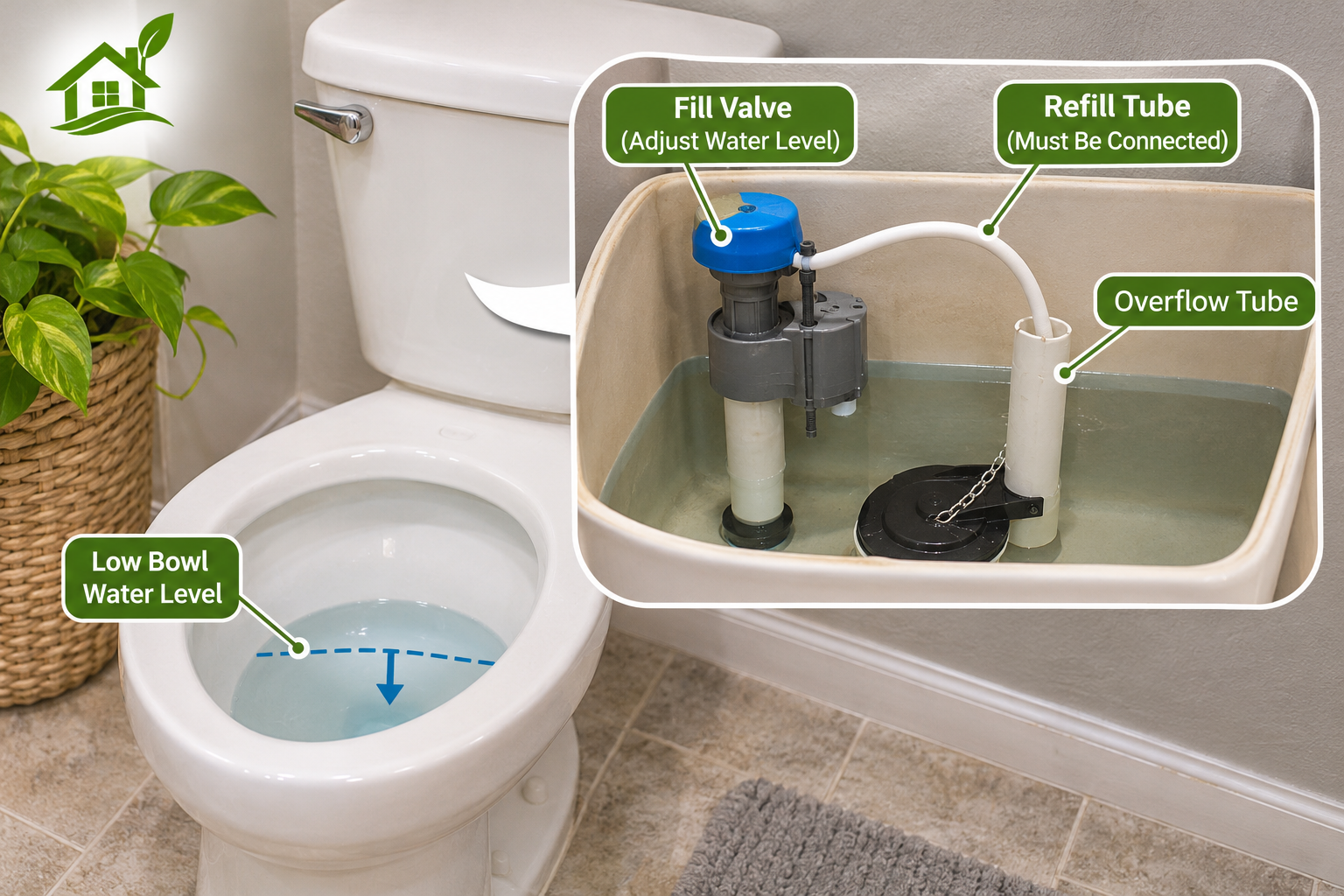
Unfilled Trapways from Detached Fill Tubes: When the thin plastic fill tube slips off the overflow pipe inside the tank, water dumps directly into the tank instead of refilling the bowl during the flush cycle.
-
Restricted Water Flow from Mineral-Clogged Rim Jets: Hard water scale buildup inside the small siphon rim jets under the bowl rim blocks the water volume needed to raise the bowl’s standing water level.
-
Hidden Subfloor Leaks from Blown Wax Rings: A compromised wax ring or loose floor bolts allow bowl water to leak out around the base, causing floor damage or ceiling stains below.
Settling for weak flushes, sewer gas smells, or hidden floor leaks leads to daily bathroom frustration, high water usage, and expensive structural repairs.
The Solution: Systematic Tank Inspections, Valve Adjustments & DIY Maintenance
The ultimate solution for restoring correct toilet bowl water levels lies in executing a systematic step-by-step diagnostic process inside the toilet tank and around the base. Most bowl refilling problems stem from simple mechanical misalignments that take only minutes to fix.
By reattaching thin fill tubes, turning fill valve adjustment screws, clearing rim jet scale with warm vinegar, and replacing worn wax seals or broken float balls, homeowners can easily restore proper bowl water levels without paying expensive plumber service fees.
Technical Breakdown: 8 Causes & Step-by-Step DIY Fixes
Follow this diagnostic breakdown to identify and resolve the root cause of your low toilet bowl water level.
01. Detached or Broken Fill Tube
-
The Cause: The thin, flexible plastic refill tube inside the tank has popped off the overflow pipe or fill valve nipple, directing refill water into the tank rather than down into the bowl.
-
The Fix: Reattach the tube firmly over the fill valve nipple and clip the opposite end inside the open top of the overflow tube. If the tube end is cracked or stretched out, snip off 1/2-inch with scissors or replace it with a new $6 refill tube.
02. Fill Valve Adjusted Too Low
-
The Cause: The fill valve height setting or adjustment screw is dialed too low, causing the valve to shut off water before the bowl reaches its optimal standing trap level.
-
The Fix: Locate the adjustment screw alongside the fill valve or floating arm. Turn the screw clockwise (+) with a screwdriver or by hand to raise the water line in the tank. If the valve fails to respond, replace it with a standard universal fill valve ($10 to $15).
03. Leaks From the Toilet Base (Wax Ring Failure)
-
The Cause: A broken wax ring seal or loose closet flange bolts allow water to leak out from the base of the toilet into the subfloor or floor surface.
-
The Fix: Shut off the water supply, drain the tank and bowl, and unbolt the toilet. Scrape off the old wax ring, clean the flange, and set a new wax or rubber seal down before bolting the toilet securely back to the floor.
04. Mineral-Clogged Rim Jets
-
The Cause: Hard water minerals, limescale, or bacteria clog the small inlet holes (rim jets) beneath the bowl rim, restricting the volume of water entering the bowl during flushes.
-
The Fix: Warm up two cups of distilled white vinegar and pour it directly down the overflow tube inside the tank. Let it sit for 30 minutes, then use a small hand mirror and a wire coat hanger or toothpick to clear scale out of each jet opening before flushing.
05. Hairline Cracks in the Porcelain Toilet Bowl
-
The Cause: Hairline cracks below the standing water line allow water to slowly seep into the outer bowl cavity or onto the floor, draining the trap level.
-
The Fix: Inspect the porcelain for hairline fractures. If a small crack is above the waterline or on the outer shell, seal it with waterproof epoxy ($10 to $20). If the bowl is cracked through the internal trapway, replace the toilet.
06. Water Evaporation (Vacations or Extended Disuse)
-
The Cause: Standing bowl water naturally evaporates during long vacations, hot spells, or in rarely used guest bathrooms, breaking the liquid barrier against sewer gas odors.
-
The Fix: For long trips, seal the bowl rim with plastic wrap or install a toilet evaporation canopy ($10 to $15) to trap moisture condensation so it drips back into the bowl.
07. Partial Toilet Clog / Siphon Pull
-
The Cause: A partial blockage in the trapway or waste line creates a negative pressure vacuum during flushing that sucks standing water down out of the bowl right after it fills.
-
The Fix: Use a flange toilet plunger or a toilet auger (snake) to clear the partial blockage. Alternatively, pour 1 cup of liquid dish soap into the bowl, let it sit for 30 minutes to lubricate the blockage, and flush with hot water.
08. Waterlogged or Broken Float Ball Assembly
-
The Cause: On older copper or plastic ballcock assemblies, a cracked float ball fills with water and sinks, misreading water height and shutting off water prematurely.
-
The Fix: Unscrew the waterlogged float ball from the metal arm and thread on a new replacement float ball, or upgrade the entire assembly to a modern float-cup fill valve ($20).
4-Step Actionable DIY Troubleshooting Protocol
To quickly restore your toilet bowl water level today, follow these core steps in order:
-
Inspect the Tank Refill Tube: Remove the tank lid and confirm the thin plastic fill tube is clipped securely inside the open overflow pipe.
-
Adjust the Fill Valve Height: Turn the fill valve adjustment screw clockwise (+) to raise the overall tank water level to 1 inch below the overflow pipe rim.
-
De-Scale Rim Jets with Vinegar: Pour warm white vinegar down the overflow pipe to dissolve hard water mineral blockages clogging the bowl rim jets.
-
Unclog Trapways with a Flange Plunger: Execute 10 to 15 firm plunging strokes using a flanged toilet plunger to eliminate partial trapway clogs causing siphon pull.
Proven Home ROI Across Toilet Maintenance
Real-world plumbing maintenance and contractor guidance confirm clear practical benefits:
-
Restored Flushing Efficiency: Ensures a complete, powerful single flush that carries waste fully down sewer lines.
-
Blocked Sewer Gas Odors: Keeps the bowl water trap filled to prevent foul sewer gas smells from entering living spaces.
-
Avoided Plumber Expenses: Resolving fill valve adjustments, fill tube clips, and rim jet scale yourself saves $100 to $200 in unnecessary service call fees.
Elevate Your Bathroom Maintenance Today
Do not let weak flushes, low bowl water levels, or annoying fill tube disconnections ruin your bathroom routine. Following this systematic troubleshooting guide—from clipping fill tubes and adjusting valves to de-scaling rim jets—guarantees a powerful, fully functional toilet for your home.
Start inspecting your toilet tank and adjusting your fill valve today!
Which fix are you planning to try first—checking your tank’s thin fill tube connection, adjusting the fill valve height screw, or de-scaling your bowl rim jets with vinegar?