



























The Challenge of Controlling Drafts and Heat Loss in Unheated Garages
Garages are primary targets for energy loss in modern homes, frequently operating as cold drafts traps in winter and heat boxes during summer. Homeowners attempting to convert garages into functional workshops, home gyms, or extended living spaces routinely struggle with severe temperature fluctuations. Uninsulated garage walls, open ceiling joists, and hollow metal doors allow rapid thermal transfer, making space heaters or air conditioners work overtime. Sourcing an effective, material-specific insulation strategy that seals air gaps while providing a high thermal resistance (R-value) remains a primary goal for home renovators.
Furthermore, insulating an unheated garage without addressing air leaks or thermal bridging delivers disappointing comfort gains while wasting hard-earned renovation dollars.
Why Skipping Air Sealing and Using the Wrong Insulation Fails Homeowners
Applying generic insulation batts to an unsealed, drafty garage introduces severe thermal and structural bottlenecks:
-
Unsealed Air Leak Heat Loss: Installing high-R-value batts without sealing wall gaps allows cold air currents to bypass insulation barriers entirely, rendering the insulation ineffective.
-
Moisture Retention in Exposed Fiberglass: Unfaced fiberglass installed in open, drywall-free stud bays absorbs atmospheric moisture, sags over time, and catches dust.
-
Uninsulated Garage Door Thermal Bridges: Insulating garage walls while neglecting the large sectional metal door leaves a massive, uninsulated metal wall that radiates cold directly into the room.
Settling for unsealed air cracks, improper facing materials, or bare metal door panels leads to wasted heating energy, high utility bills, and uncomfortable interior temperatures.
The Solution: Material-Specific Insulation Selection & Strategic Air Sealing
The ultimate strategy for a thermally efficient garage lies in pairing thorough low-expanding foam air sealing with insulation materials tailored to your specific wall condition (finished vs. open framing) and garage door construction. According to building experts, insulating makes the most financial sense when adding a permanent or temporary heating source to the space.
By filling wall stud gaps with paper-faced fiberglass, blowing fire-resistant cellulose into finished drywall cavities, using rigid foam on metal door panels, or applying spray foam for living-space conversions, homeowners can stabilize temperatures by 12°F to 20°F and lower overall thermal transfer.
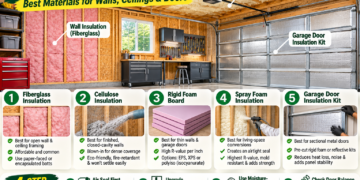
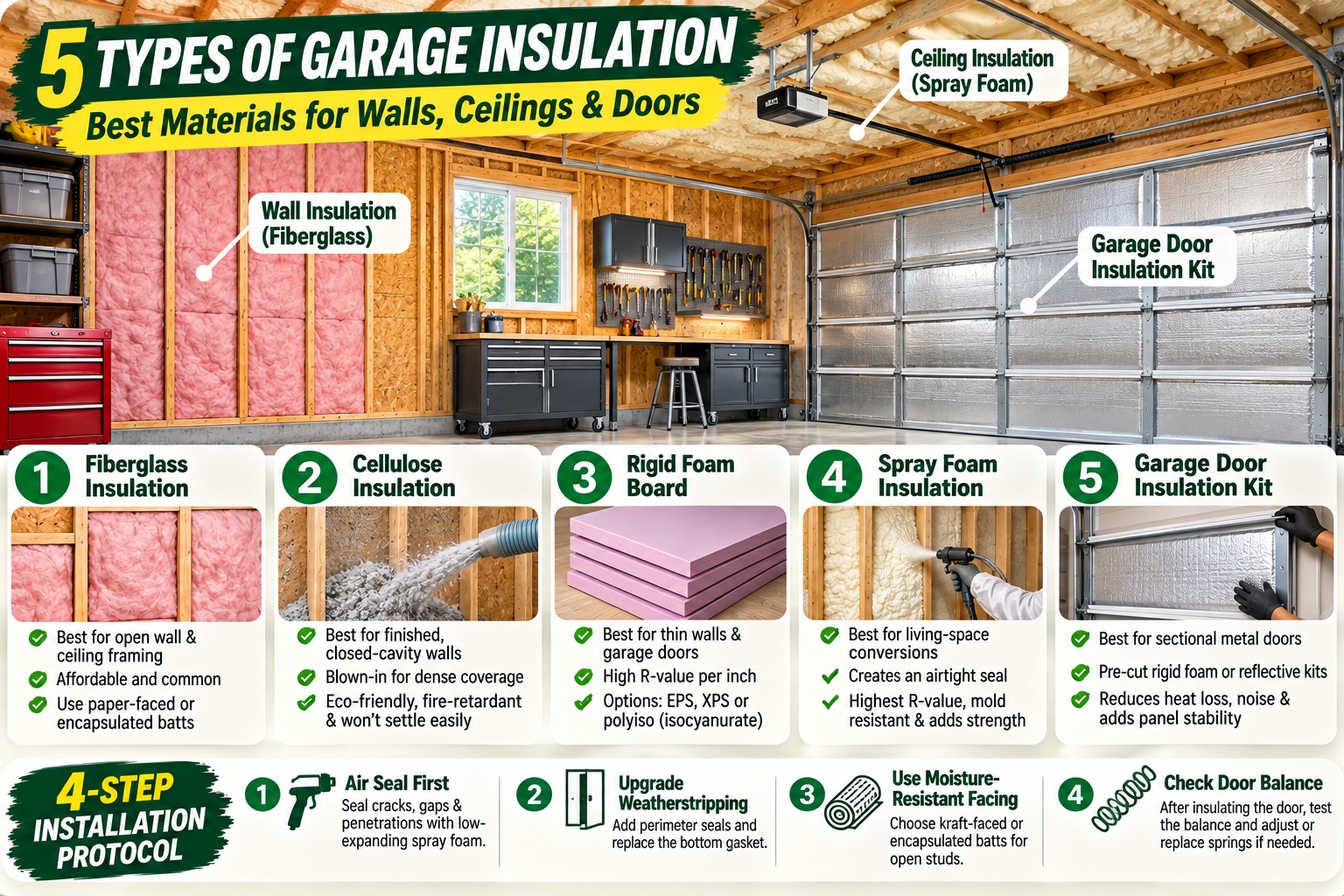
Technical Breakdown: 5 Main Types of Garage Insulation
-
01. Fiberglass Insulation (Best for Open Wall & Ceiling Framing): The most common and affordable option, available in precut batts, blankets, or loose-fill. Ideal for standard 16-inch or 24-inch stud bays. Use paper-faced or plastic-encapsulated batts in un-drywalled garages to protect itchy glass fibers from moisture and dust buildup.

-
02. Cellulose Insulation (Best for Finished, Closed Cavity Walls): An eco-friendly, loose-fill option made from recycled paper treated with fire and insect retardants. Blown directly into finished, uninsulated drywall cavities through strategic access holes, providing dense coverage that won’t settle easily.

-
03. Rigid Foam Board Insulation (Best for Thin Walls & Garage Doors): Dense 4×8-foot sheets (expanded polystyrene, XPS, or polyisocyanurate) offering high R-value per inch of thickness. Ideal for insulating thin exterior walls, beneath floor subfloors during living-space conversions, or fitted directly into garage door panels.

-
04. Spray Foam Insulation (Best for Living-Space Conversions): A high-performance polyurethane foam that expands to create a completely airtight seal while delivering maximum R-value. Perfect for converting garages into full-time bedrooms or offices, providing mold resistance and structural rigidity.

-
05. Garage Door Insulation Kits (Best for Sectional Metal Doors): Specialized pre-cut rigid foam or reflective foil kits designed to fit standard metal door panels. Dampens street noise, increases panel stability, and reduces thermal transfer through thin steel sections.

4-Step Actionable Air Sealing & Installation Protocol
To maximize the thermal performance and energy efficiency of your garage insulation project, follow these four core steps:
-
Perform Low-Expanding Spray Foam Air Sealing: Before placing any insulation, inspect stud bays and ceiling joints for light gaps. Seal all exterior gaps, cracks, and wire penetrations with low-expanding canned spray foam.
-
Upgrade Door Weatherstripping & Bottom Gaskets: Install perimeter vinyl weather-seal strips along the top and sides of the garage door frame, and replace worn rubber bottom gaskets to block draft intrusion at floor level.
-
Select Moisture-Resistant Facing for Open Studs: If leaving garage walls without drywall, select kraft-faced or encapsulated fiberglass batts and staple the paper flanges securely inside stud faces to manage vapor drive.
-
Inspect Spring Balance After Door Insulation: After installing rigid foam door kits, test the manual balance of your garage door. If the added weight causes the door to slide down rapidly, adjust or replace older torsion/extension springs with a professional technician.
Proven Home ROI Across Garage Upgrades
Real-world application and home efficiency data confirm immediate practical benefits:
-
Temperature Stabilization: Reduces heat gain in summer and maintains interior temperatures 12°F to 20°F warmer in winter.
-
Significant Noise Reduction: Dense rigid foam and fiberglass panels absorb exterior traffic noise and power tool reverberation.
-
Lower Energy Utility Bills: Prevents cold air transfer through shared house walls, reducing the workload on adjacent home HVAC systems.
Elevate Your Garage Space Today
Do not let air leaks, cold drafts, or uninsulated metal doors compromise your garage workshop or living conversion goals. Selecting the right insulation material—supported by upfront spray foam air sealing and proper garage door weatherstripping—guarantees a comfortable, energy-efficient space year-round.
Start planning your garage insulation and air sealing project today.
Which area of your garage are you planning to insulate first—the open wall framing, the finished ceiling, or the sectional garage door?