



















The Challenge of Deciding Between Electromagnetic Induction and Electric Cooktops
When remodeling a kitchen or replacing an aging range, choosing between induction and electric cooktops can feel overwhelming. While both options run on standard 220/240-volt electrical power and feature sleek glass tops, their underlying heating mechanics perform completely differently. Homeowners routinely struggle to decide whether the ultra-fast heating speed and cool-to-the-touch safety of induction justify its higher upfront price tag, or if a traditional radiant electric smooth-top provides a better fit for their existing cookware collection. Sourcing a clear, head-to-head comparison of operational costs, safety features, cleaning ease, and long-term durability remains a primary goal for kitchen renovators.
Furthermore, making an impulse purchase without testing your current pots and pans for magnetic compatibility can result in frustrating hidden costs when upgrading your kitchen appliances.
Why Mismatched Cookware and Radiant Surface Burn Risks Cause Daily Frustration
Selecting the wrong electric cooktop style without evaluating daily cooking habits creates several ongoing kitchen bottlenecks:
-
Incompatible Non-Ferrous Cookware: Purchasing an induction cooktop when your kitchen relies heavily on copper, glass, or non-magnetic aluminum cookware forces you to replace your entire cookware set or use awkward metal adapter plates.
-
Fused Surface Spills & Burn Hazards: Radiant electric glass tops become scalding hot during cooking, causing boil-overs to fuse and char onto the ceramic glass, requiring tedious scraping and specialized cleaners.
-
Slow Heating Speed & Thermal Residual Heat: Traditional electric coil and radiant smooth-tops heat up slowly and retain high surface heat long after being turned off, creating burn hazards for children and pets.
Settling for slow boil times, high residual surface heat, or unexpected cookware replacements leads to daily cooking frustration and extra kitchen expense.
The Solution: Head-to-Head Appliance Evaluation and Cookware Readiness
The ultimate strategy for selecting the ideal cooktop lies in matching your kitchen budget, safety priorities, and existing cookware to the right electrical heating technology. While induction uses electromagnetism to heat the pan directly at 85% energy efficiency, radiant electric elements heat the glass top directly at 75% to 80% efficiency, accommodating any pot material.
By understanding the key trade-offs between induction, radiant smooth-tops, and exposed electric coils, home chefs can choose an appliance that delivers optimal speed, safety, and value.
Technical Breakdown: Induction vs. Radiant Electric vs. Coil Stoves
-
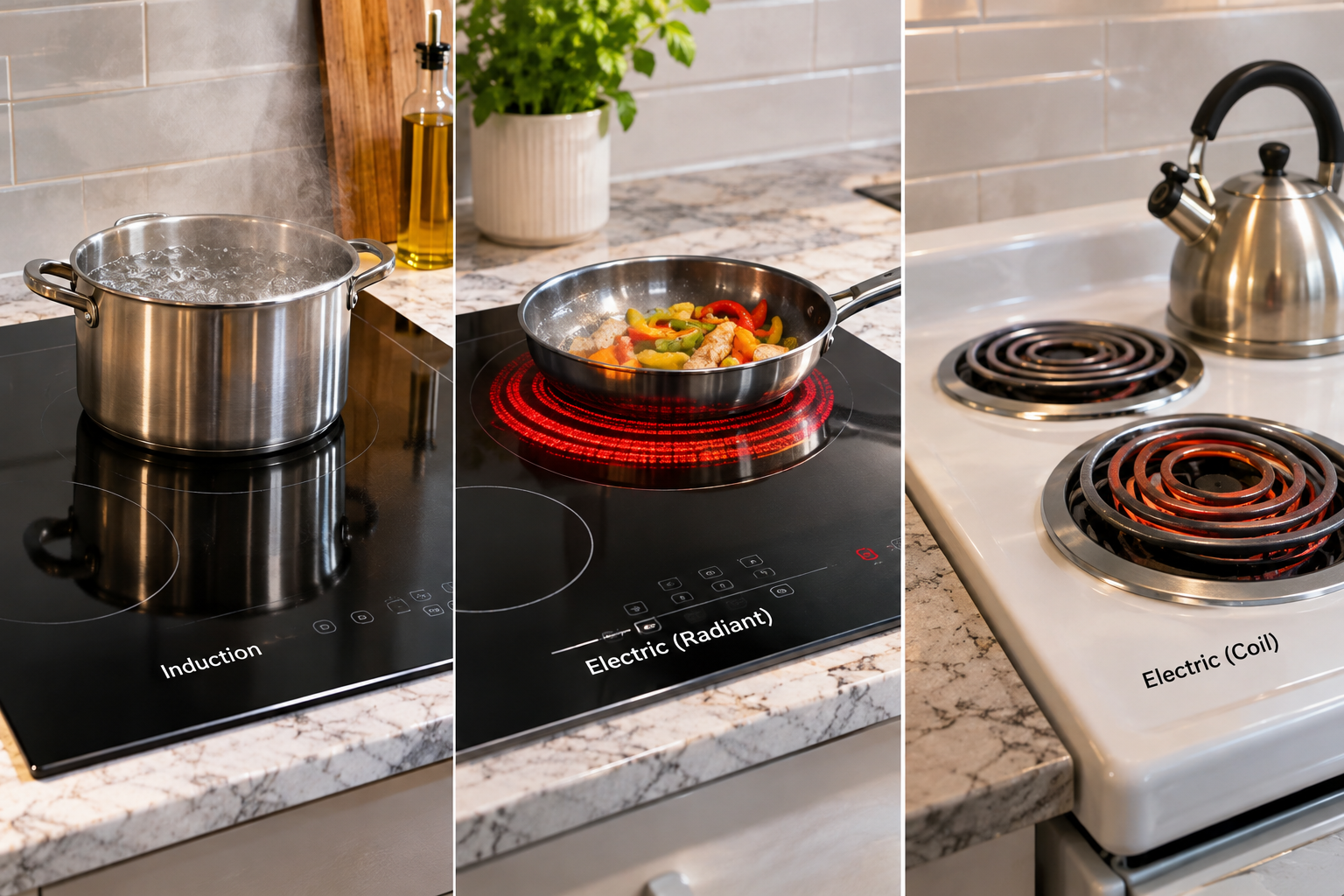
01. Heating Technology & Surface Temperature: Induction uses electromagnetic fields to turn ferromagnetic cookware into its own heating element, keeping the glass surface relatively cool. Radiant electric uses buried electric coils beneath glass to heat pans via radiant heat transfer. Coil cooktops use exposed metal coils that contact pans directly.
-
02. Energy Efficiency Comparison: Induction operates at roughly 85% thermal efficiency, directing nearly all power into the pan. Radiant and coil electric cooktops operate at 75% to 80% efficiency, losing roughly 15% to 20% of generated heat into ambient kitchen air.
-
03. Heating Speed & Start-Up Time: Induction heats pans 20% to 40% faster than radiant electric, coil, or natural gas stoves. Water reaches a rolling boil in nearly half the time required by standard electric elements.
-
04. Cookware Compatibility Rules: Induction requires ferromagnetic cookware (cast iron, enameled cast iron, or magnetic stainless steel). Radiant and coil electric stoves work with all pan materials, including glass, copper, aluminum, and ceramic.
-
05. Appliance Durability & Purchase Costs: Coil electric cooktops are the most affordable ($350–$650) and highly durable due to the absence of glass tops. Radiant smooth-tops cost between $550 and $1,200. Induction cooktops range from $900 to over $2,000, lasting 15 to 18 years on average.
-
06. Daily Surface Maintenance: Induction tops are the easiest to clean because spills do not bake or fuse onto the cool glass. Radiant glass tops require ceramic glass cleaner for baked-on stains. Exposed coils require removing coils and soaking drip pans.
4-Step Actionable Decision Protocol
To ensure you choose the right cooktop technology for your home setup, follow these four core steps:
-
Perform the Ferromagnetic Magnet Test: Take a refrigerator magnet and test the underside of your favorite cooking pans. If the magnet clings firmly, your cookware is fully compatible with induction; if it slides off, factor cookware replacement costs into your decision.
-
Verify Electrical Power Connections: Check your kitchen’s wiring supply. Most induction and electric cooktops require a dedicated 220/240V 40-to-50-amp electrical line. (Portable two-burner models run on standard 120V 20-amp outlets).
-
Assess Safety Priorities for Young Families: If you have young children or pets, prioritize induction’s cool-surface technology to eliminate accidental stovetop burn risks and residual post-cooking heat.
-
Match Your Renovation Budget: Choose coil electric for budget-first rentals or heavy-duty durability; choose radiant electric for smooth-top aesthetics without replacing non-magnetic cookware; or select induction for high-speed performance and maximum energy efficiency.
Proven Home ROI Across Kitchen Upgrades
Real-world performance testing and contractor guidance confirm immediate practical benefits:
-
Maximize Daily Cooking Speed: Accelerates meal prep routines with 20% to 40% faster pan heating times.
-
Enhanced Kitchen Safety: Drastically lowers burn hazards through cool-glass electromagnetic transfer.
-
Lower Utility Environmental Footprint: Operates at peak 85% energy efficiency, reducing household power waste and eliminating indoor gas pollutants.
Elevate Your Kitchen Today
Do not let slow heating elements, difficult cleanups, or cookware confusion delay your kitchen upgrade. Evaluating induction versus radiant electric options—supported by magnetic pan testing, safety needs, and budget goals—guarantees a safe, fast, and highly efficient cooking space for years to come.
Start planning your cooktop upgrade and cookware evaluation today.
Which cooktop style—ultra-fast cool-surface induction, versatile radiant smooth-top, or durable budget coil electric—best fits your kitchen routine?