
















The Challenge of Modernizing Kitchen Stoves for Speed, Energy Efficiency, and Safety
Homeowners and home chefs upgrading their kitchens frequently grapple with selecting the right cooktop technology. Traditional gas stoves offer visual flame control but waste significant heat, raise kitchen ambient temperatures, and pose indoor air quality and fire safety risks. Conventional electric coil or smooth glass cooktops take longer to heat up, retain residual surface heat for extended periods, and are prone to burnt-on food spills that are difficult to scrub away. Sourcing an ultra-fast, energy-efficient, and inherently safe cooking technology remains a primary goal for modern kitchen renovations.
Furthermore, converting from gas or traditional electric without understanding specific magnetic cookware requirements or dedicated electrical line installations can lead to unexpected kitchen remodeling delays and expenses.
Why Conventional Gas and Radiant Electric Stoves Cause Cooking Inefficiencies
Relying on traditional thermal conduction or open gas flames introduces several daily operational bottlenecks in the kitchen:
-
Excessive Thermal Energy Loss: Gas and radiant electric elements heat the surrounding air and glass surface first, wasting a high percentage of energy before transfer reaches food pans.
-
Safety Hazards & Burn Risks: Red-hot coils and radiant glass tops stay dangerously hot long after cooking finishes, increasing accidental burn risks for children and pets.
-
Hard-to-Clean Baked-On Spills: Because conventional cooktop surfaces get scalding hot, boil-overs instantly bake and char onto the surface, requiring heavy abrasive cleaning.
Settling for slow boil times, high energy bills, and hard-to-clean stovetops leads to daily kitchen frustration and unnecessary utility expenses.
The Solution: Electromagnetic Energy Transfer for Instant Heat and Safety
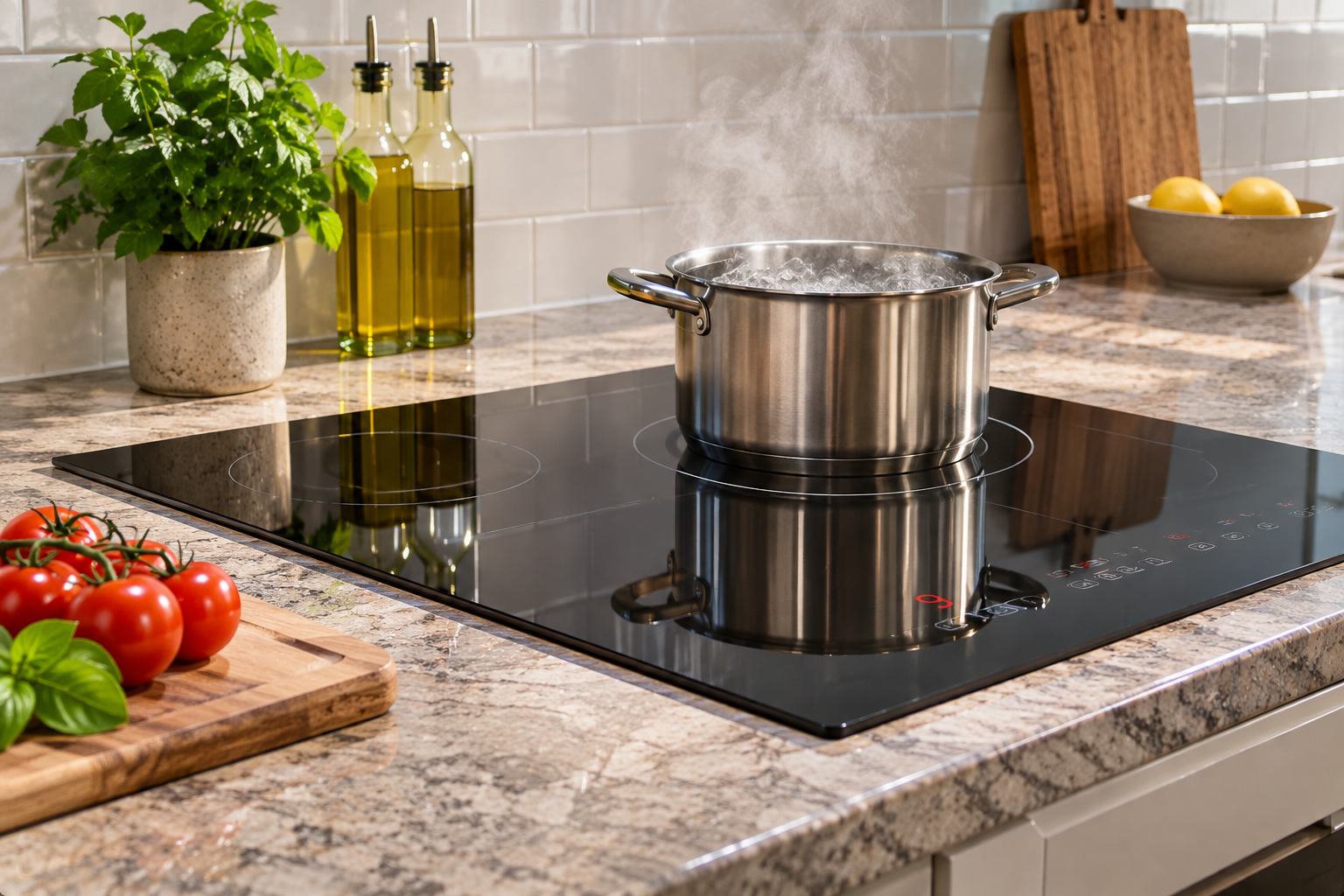
The ultimate solution for high-speed, precise, and energy-efficient cooking lies in induction technology. An induction cooktop features powerful copper electromagnetic coils beneath a smooth ceramic glass surface. Instead of generating thermal heat directly on the glass, electricity powers an electromagnetic field that reacts directly with magnetic cookware bases. This direct connection generates heat within the pan itself, leaving the surrounding glass cooktop remarkably cool to the touch.
Available in freestanding, slide-in, and drop-in configurations, induction ranges deliver unparalleled cooking speed, sleek aesthetics, and maximum energy efficiency for modern homes.
Technical Breakdown: How Induction Works & Key Feature Comparison
-
01. Electromagnetic Heat Generation Protocol: Electric current flows through under-glass copper coils, creating an alternating magnetic field. When ferrous (magnetic) cookware is placed on top, the field induces microscopic electric currents inside the pan base, instantly generating internal thermal energy.
-
02. Magnetic Cookware Compatibility Requirements: Induction requires cookware with magnetic properties to trigger heat generation. Cast iron, enameled cast iron, nickel, and magnetic stainless steel work seamlessly. Non-magnetic materials like aluminum, copper, and glass will not work unless engineered by the manufacturer with a magnetized stainless steel base plate.
-
03. High Cooking Speed & Energy Efficiency: Direct pan heating eliminates thermal dissipation into ambient air. Water boils in nearly half the time required by gas or radiant electric burners, conserving electricity and lowering utility costs.
-
04. Enhanced Home Safety Features: Because heat is created inside the pan rather than on the cooktop, removing the cookware causes the magnetic field to disengage immediately. The glass surface stays significantly cooler, drastically reducing burn risks and preventing auto-ignition of stray dish towels.
-
05. Easy Surface Maintenance: Spills do not bake onto the glass surface because the cooktop stays relatively cool. Wipe down spills effortlessly using a soft microfiber cloth and mild glass cleaner.
-
06. Trade-Offs to Consider (Visual Heat & Costs): Induction lacks an open flame or visual element glow, which can require a short adjustment period for cooks accustomed to gas visual feedback. Additionally, switching from gas to induction requires a dedicated 240V 40-to-50-amp electrical circuit installed by a licensed electrician.
4-Step Actionable Induction Setup & Cookware Protocol
To ensure a seamless transition from gas or conventional electric to a high-performance induction cooktop, follow these four core steps:
-
Test Existing Cookware with the Magnet Test: Hold a simple refrigerator magnet to the bottom of your existing pots and pans. If the magnet clings firmly to the base, the cookware is fully induction-compatible.
-
Verify Electrical Outlet Specifications: Check your kitchen’s outlet configuration. Upgrading from standard electric to induction uses the same 240V outlet, while transitioning from a gas line requires hiring a licensed electrician ($50 to $100/hr plus materials) to run a dedicated circuit.
-
Select Flat-Bottomed Ferrous Cookware: Choose heavy-bottomed stainless steel or enameled cast iron cookware with completely flat bases to ensure full surface contact with the electromagnetic cooktop zone.
-
Utilize Immediate Glass Surface Cleanup: Wipe up sauce drips and splatters immediately post-cooking using a damp microfiber cloth; because the glass surface doesn’t reach extreme temperatures, splatters clean off instantly without scraping.
Proven Home ROI Across Modern Kitchen Remodels
Real-world kitchen performance data and contractor guidance confirm immediate practical benefits:
-
Faster Meal Preparation: Reduces water boil times by up to 50%, accelerating daily cooking routines.
-
Lower Indoor Ambient Heat: Keeps kitchen air significantly cooler during heavy summer cooking, reducing home air conditioning loads.
-
Sleek, High-Value Resale Aesthetics: Clean, uninterrupted smooth-top glass design elevates overall kitchen aesthetics and boosts modern home resale value.
Elevate Your Kitchen Cooking Experience Today
Do not let slow heating elements, difficult cleanups, or open flame hazards hold back your culinary ambitions. Choosing an induction cooktop—supported by magnetic cookware checks, simple glass maintenance, and proper 240V electrical wiring—guarantees a safer, faster, and highly energy-efficient kitchen for years to come.
Start planning your kitchen induction upgrade today.
Are you upgrading directly from a standard electric outlet setup or converting from a gas range connection?