





























The Challenge of Planning Kitchen Appliance Upgrades and Navigating Hidden Installation Fees
Upgrading or replacing a kitchen dishwasher is one of the fastest ways to improve daily home efficiency and lower utility bills. However, home renovators and budget-conscious homeowners routinely run into unexpected financial hurdles when pricing a new appliance. While basic unit price tags seem straightforward, total installation costs vary widely depending on plumber hourly rates, electrical outlet requirements, old unit removal fees, and modified plumbing hookups. Sourcing a transparent cost breakdown that balances unit tiers, professional labor, and DIY savings options remains a primary goal for home improvers.
Furthermore, attempting a quick swap in older homes without verifying dedicated electrical circuits or PEX line compatibility can cause electrical breaker trips, water leaks, and costly emergency plumbing repairs.
Why Ignoring Hookup Modifications and Skipping Maintenance Shortens Appliance Lifespan
Failing to account for modern installation standards and proper post-install maintenance introduces severe financial and functional bottlenecks:
-
Outdated Electrical & Plumbing Connections: Installing modern dishwashers into setups over 15 years old without dedicated 120V circuits or upgraded supply valves causes code violations and operational failure.
-
Unnecessary Removal & Disposal Charges: Paying full contractor rates for basic old-unit disconnection adds unnecessary labor hours to simple replacement projects.
-
Mold Growth & Limescale Buildup: Keeping dishwasher doors sealed post-cycle or neglecting hard water limescale clogs filters, damages internal mechanisms, and cuts unit lifespan in half.
Settling for uncalculated installation fees or neglecting routine appliance care leads to budget overruns, foul odors, and premature unit replacement.
The Solution: Complete Cost Transparency, Smart DIY Savings & Pro-Active Maintenance
The ultimate strategy for a smooth dishwasher installation lies in understanding standard pricing structures, identifying where to save on labor, and executing proper maintenance. According to licensed plumber Kelly Russum (KC’s 23 ½ Hour Plumbing) and appliance repair expert Ian Palmer-Smith (Domestic & General), average total installation costs round out at $1,100 (ranging from $500 for economy setups to $1,700 for high-end smart models).
By removing old units yourself, verifying dedicated 15 to 20-amp electrical circuits, and using vinegar deep-cleans alongside dishwasher salt, homeowners ensure smooth installations and a decade of reliable performance.
Cost Breakdown: Unit Tiers, Labor Rates & Installation Factors
-
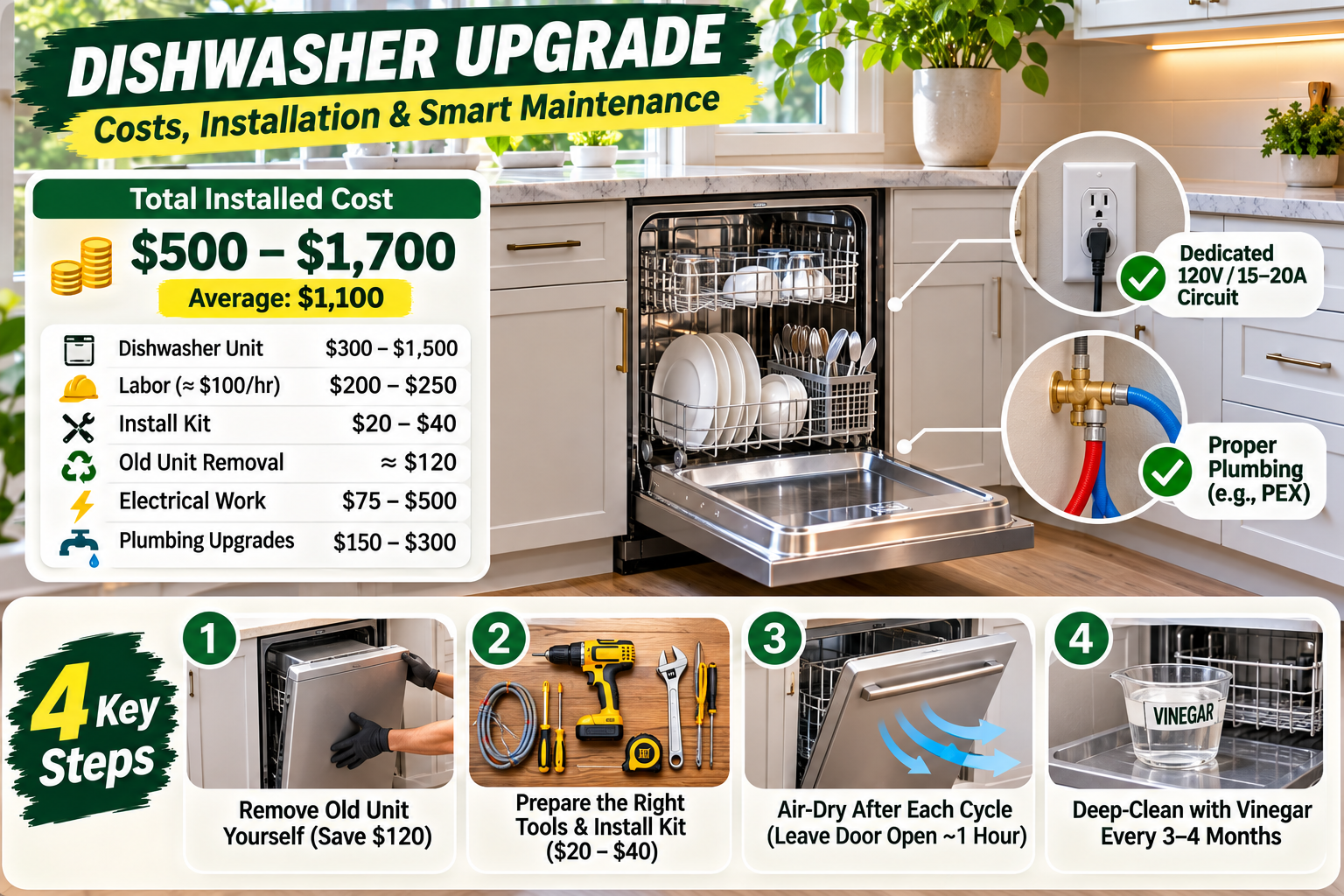
01. Total Installation Cost Overview: The average total cost to buy and install a dishwasher is $1,100. Economy setups start at $500 total, while high-end luxury smart installations reach up to $1,700.
-
02. Professional Plumber Labor Rates: Licensed plumbers typically charge around $100 per hour. Standard unit replacements take 1.5 to 2 hours, resulting in $200 to $250 in direct labor fees.
-
03. Unit Price Ranges: Basic units (black, white, or silver with standard sound ratings) cost around $300. High-end units featuring ultra-quiet decibel levels, smart tech integration, and custom third racks range up to $1,500 (averaging $800).
-
04. Installation Kits & Old Unit Disposal: Installation supply kits cost $20 to $40. Having a plumber disconnect, remove, and dispose of an old unit adds roughly $120 and an extra hour of labor.
-
05. Electrical Outlets & Dedicated Circuits: Dishwashers require a dedicated 120V grounded electrical supply with a 15 or 20-amp breaker. Installing a new outlet in an existing box costs $75 to $100, while running a brand-new dedicated circuit from the service panel can cost up to $500.
-
06. Plumbing & Hookup Upgrades: Modifying plumbing or updating 15-year-old supply lines to modern code adds $150 to $300 to total project costs.
4-Step Actionable DIY Installation & Maintenance Protocol
To ensure your dishwasher replacement remains within budget and operates smoothly for 10+ years, follow these four core steps:
-
Perform Self-Removal to Save $120: Disconnect water and electrical supplies to the old unit, pull it out of the cabinet bay, and dispose of it yourself before the installer arrives to eliminate extra labor charges.
-
Verify Required DIY Tools & Kits: For direct self-installation in existing setups, purchase a $20 to $40 installation kit and equip yourself with a power drill, hole saw, adjustable wrench, pliers, Phillips/flat screwdrivers, tape measure, and bubble level.
-
Execute the Air-Dry Mold Prevention Rule: Leave the dishwasher door propped open for at least one hour after every cycle to prevent warm, damp air from breeding mold, bacteria, and foul odors.
-
Schedule Quarterly Vinegar Deep-Cleans: Place a small cup of white vinegar on the top rack and run an empty hot cycle every 3 to 4 months to clear grease and hard water limescale from internal spray arms and filters.
Proven Home ROI Across Appliance Upgrades
Real-world plumbing data and contractor guidance confirm immediate practical benefits:
-
Controlled Budgeting: Clear awareness of labor rates ($100/hr) and kit requirements eliminates surprise contractor line items.
-
Extended Appliance Longevity: Regular filter scrubbing with a toothbrush and soft-water salt management extends unit lifespan up to 10 years.
-
Seamless Kitchen Functionality: Upgraded dedicated circuits and PEX plumbing supply lines prevent sudden circuit trips and water leak damage under kitchen cabinets.
Elevate Your Kitchen Today
Do not let hidden plumbing fees, electrical confusion, or improper maintenance compromise your kitchen upgrade. Understanding average installation costs—supported by smart self-prep, dedicated circuit checks, and routine vinegar maintenance—guarantees a quiet, efficient, and long-lasting dishwasher.
Plan your dishwasher installation and maintenance strategy today.
Are you planning a direct unit replacement in an existing setup, or building a brand-new kitchen bay requiring electrical and plumbing runs?