
























The Challenge of Choosing Between Waterproof Vinyl and Durable Ceramic Tile
Selecting the ideal floor surface for moisture-prone, high-traffic spaces like kitchens, bathrooms, and entryways presents a major design and financial decision for homeowners. While traditional hardwood, carpeting, and standard laminates warp or degrade when exposed to standing water, both vinyl tile and ceramic/porcelain tile offer exceptional waterproofing and stain resistance. However, deciding between the low-cost, DIY-friendly nature of vinyl and the long-term structural durability of ceramic tile creates significant confusion during home renovations. Sourcing a transparent comparison of long-term value, daily maintenance demands, installation complexity, and total project costs remains an essential step before purchasing flooring materials.
Furthermore, picking the wrong surface without evaluating subfloor conditions, budget constraints, or heat exposure can lead to melted tiles, subfloor moisture damage, or difficult replacement processes.
Why Subfloor Seepages, Heat Vulnerability, and Complex Mortar Installs Cause Delays
Selecting a flooring material without understanding its structural limitations introduces several physical and financial bottlenecks:
-
Subfloor Seepage Risks: While both vinyl and ceramic tiles are waterproof, standard vinyl tiles have numerous seams that allow standing water to seep down to subfloors if puddles sit un-wiped.
-
Thermal Degradation in Synthetic Vinyl: Exposed vinyl tiles can melt, scorch, or warp when exposed to extreme heat or open flame, whereas ceramic tiles are completely fireproof.
-
Complex Labor-Intensive Installation: Installing ceramic tile requires thin-set mortar, specialized wet saws, cement board underlayment, and grout sealing, which can overwhelm beginner DIYers.
Settling for short-lived materials in high-use spaces or underestimating ceramic tile installation costs leads to budget overruns, dingy grout lines, and premature floor replacements.
The Solution: Head-to-Head Material Evaluation & Strategic Project Matching
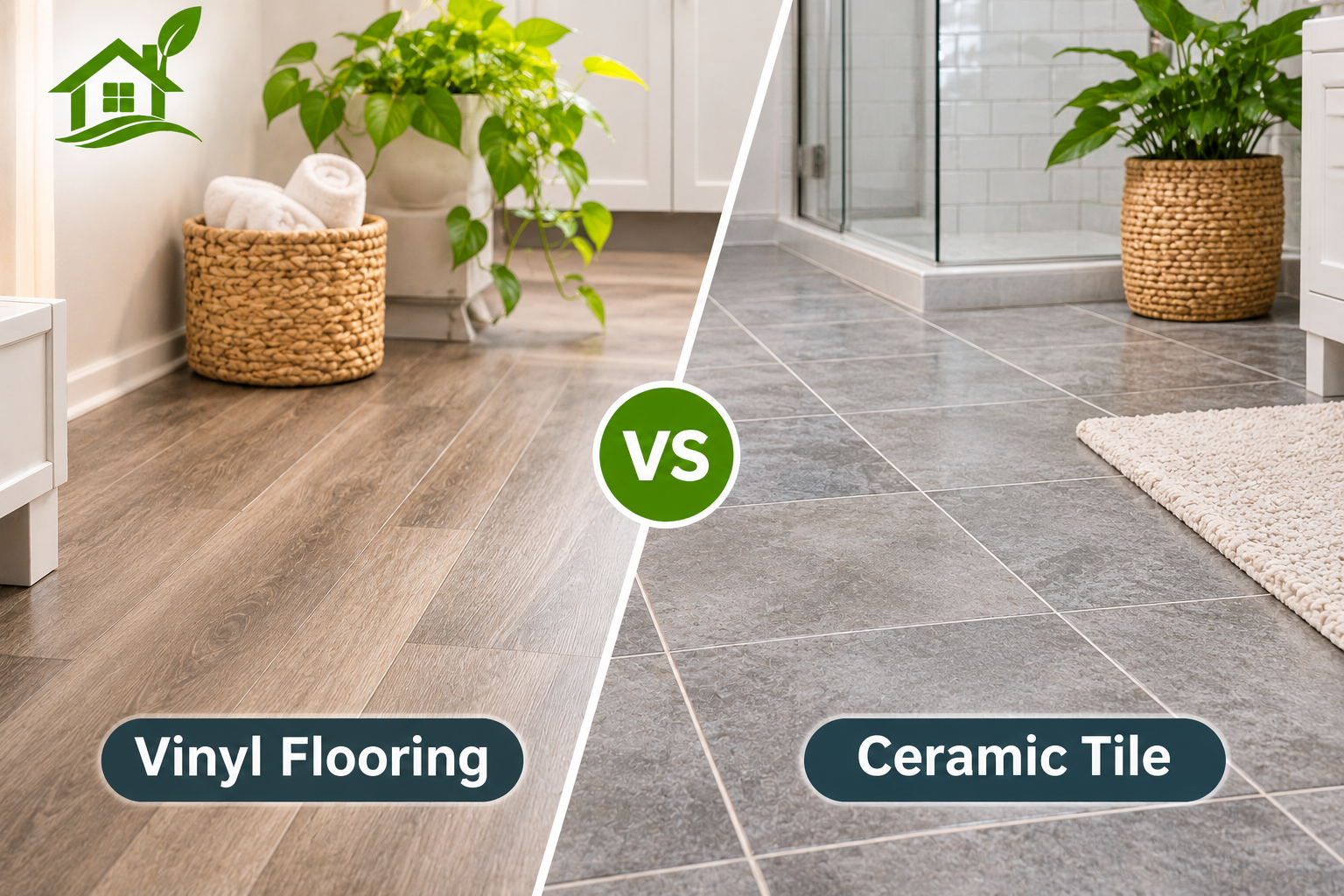
The ultimate strategy for selecting the ideal floor lies in matching your renovation budget, DIY comfort level, and lifespan expectations to the right material. Vinyl tile—available in self-adhesive squares, composite tiles, or click-lock luxury vinyl tiles (LVT)—offers an economical, resilient surface that is soft underfoot and easy to cut with a simple utility knife. Ceramic and porcelain tile—crafted from fired natural clays—provide an ultra-hard, fireproof surface that lasts 40+ years and increases home resale value.
By comparing key performance categories, home renovators can select the exact flooring option that fulfills their functional needs and financial goals.
Head-to-Head Performance Comparison
| Comparison Category | Vinyl Tile (Standard / LVT) | Ceramic & Porcelain Tile | Category Winner |
| Material Composition | PVC plastic with fiberglass/felt backing & printed wear layer | Fired natural earth clays with protective surface glaze | Ceramic Tile (Natural) |
| Water Resistance | 100% waterproof material; seams can pass water | 100% waterproof; non-porous when grout is sealed | Tie (Both Waterproof) |
| Heat Resistance | Vulnerable to scorching, melting, and extreme heat | Virtually fireproof and completely immune to heat damage | Ceramic Tile |
| Care & Daily Cleaning | Extremely easy; sweep and damp-mop with mild soap | Easy tile cleaning; requires periodic grout scrubbing | Vinyl Tile |
| Durability & Lifespan | 10 to 20 years; susceptible to scratches/gouges | 40+ years; exceptionally hard and resistant to wear | Ceramic Tile |
| DIY Installation | Very easy; peel-and-stick or click-lock snap seams | Complex; requires thin-set mortar, wet saw, and grouting | Vinyl Tile |
| Average Material Cost | $1.50 – $3.00 per sq. ft. (Self-Adhesive) | $1.00 – $20.00+ per sq. ft. ($5.00 average) | Vinyl Tile |
| Professional Labor Cost | ~$3.00 per sq. ft. | $5.00 – $17.00 per sq. ft. | Vinyl Tile |
| Resale Value Impact | Recognized as economy/budget flooring | High return on investment and strong buyer appeal | Ceramic Tile |
| Underfoot Comfort | Resilient, softer, quieter, and warmer underfoot | Extremely hard, cold, and rigid (unless heated) | Vinyl Tile |
Technical Breakdown: Key Comparison Categories
-
01. Material & Aesthetic Realism: Vinyl tile uses printed wear layers over PVC plastic to replicate wood, stone, or tile textures. Ceramic and porcelain tiles are made from real natural clays fired in high-temperature kilns, delivering authentic stone, wood-look, or artisan glaze finishes with superior visual depth.
-
02. Water & Heat Resistance: Both materials shed water effectively. However, while vinyl can scorch or release toxic off-gasses during fires, ceramic tile is completely fireproof and unaffected by hot styling tools or ambient heat.
-
03. Ease of Care & Maintenance Routine: Vinyl tile features smooth, seamless surfaces without grout, making sweeping and damp-mopping effortless. Ceramic tile requires periodic grout cleaning and re-sealing every few years to prevent dingy, discolored mortar lines.
-
04. Structural Lifespan & Repairability: Vinyl tile typically lasts 10 to 20 years and can be scratched by heavy furniture. Ceramic tile routinely lasts 40+ years; cracked individual tiles can be removed and replaced without altering the surrounding floor.
-
05. Installation Complexity & Tools Required: Self-adhesive or click-lock vinyl tiles cut easily with a utility knife and require no specialty tools, making them ideal for beginner DIYers. Ceramic tile requires setting cement board underlayments, troweling thin-set mortar, cutting tiles with a wet saw, and grouting joints.
-
06. Project Cost & Return on Investment: Self-adhesive vinyl averages $1.50 to $3.00/sq.ft. for materials plus ~$3.00/sq.ft. for labor. Ceramic tile averages $5.00/sq.ft. for stock options (and up to $20+/sq.ft. for designer porcelain), with professional installation adding $5.00 to $17.00/sq.ft.
4-Step Actionable Floor Selection Protocol
To ensure your chosen flooring material fits your lifestyle, budget, and installation capabilities, follow these four core steps:
-
Audit Your Renovation Budget & Labor Preferences: Choose vinyl tile if you want a budget-friendly project ($1.50–$3.00/sq.ft.) that you can easily install yourself in a single weekend. Choose ceramic tile if you want a permanent 40+ year upgrade and have room for professional labor costs ($5–$17/sq.ft.).
-
Evaluate Room Moisture & Heat Exposure: Use ceramic or porcelain tile in spaces exposed to extreme heat or heavy water pooling (such as entryways or full walk-in showers). Use click-lock luxury vinyl tile (LVT) or sheet vinyl in half-baths and kitchens where softer underfoot comfort is preferred.
-
Seal Grout Lines on Ceramic Tile Installations: If installing ceramic tile, apply a high-grade penetrating grout sealer once mortar cures, and reapply every 1 to 2 years to keep grout lines stain- and mildew-free.
-
Prep Subfloors Thoroughly Before Laying Tile: Ensure underlying plywood or concrete subfloors are completely clean, level, and structurally sound. Use cement board underlayments for ceramic tile or smooth underlayment panels for self-adhesive vinyl to prevent telegraphing imperfections.
Proven Home ROI Across Flooring Upgrades
Real-world remodeling data and contractor guidance confirm clear practical benefits:
-
Controlled Remodeling Expenses: Choosing vinyl tile reduces overall material and tool costs, making it ideal for quick budget refreshes.
-
Maximum Resale Equity: Installing designer porcelain or ceramic tile significantly boosts home appraisal values and attracts prospective buyers.
-
Enhanced Daily Comfort: Resilient vinyl tile softens dropped dishes and provides a warm, quiet surface underfoot compared to cold stone.
Elevate Your Flooring Project Today
Do not let material confusion, installation worries, or budget concerns stall your renovation plans. Evaluating vinyl tile versus ceramic tile against your installation skills, room heat exposure, and long-term equity goals guarantees a waterproof, high-performing floor for years to come.
Start measuring your space and selecting your ideal flooring material today!
Which flooring option—such as budget-friendly DIY vinyl tile or long-lasting, high-equity ceramic tile—best fits your upcoming kitchen or bathroom renovation?