





















The Challenge of Growing Tall Indoor Trees Without Sudden Leaf Drop
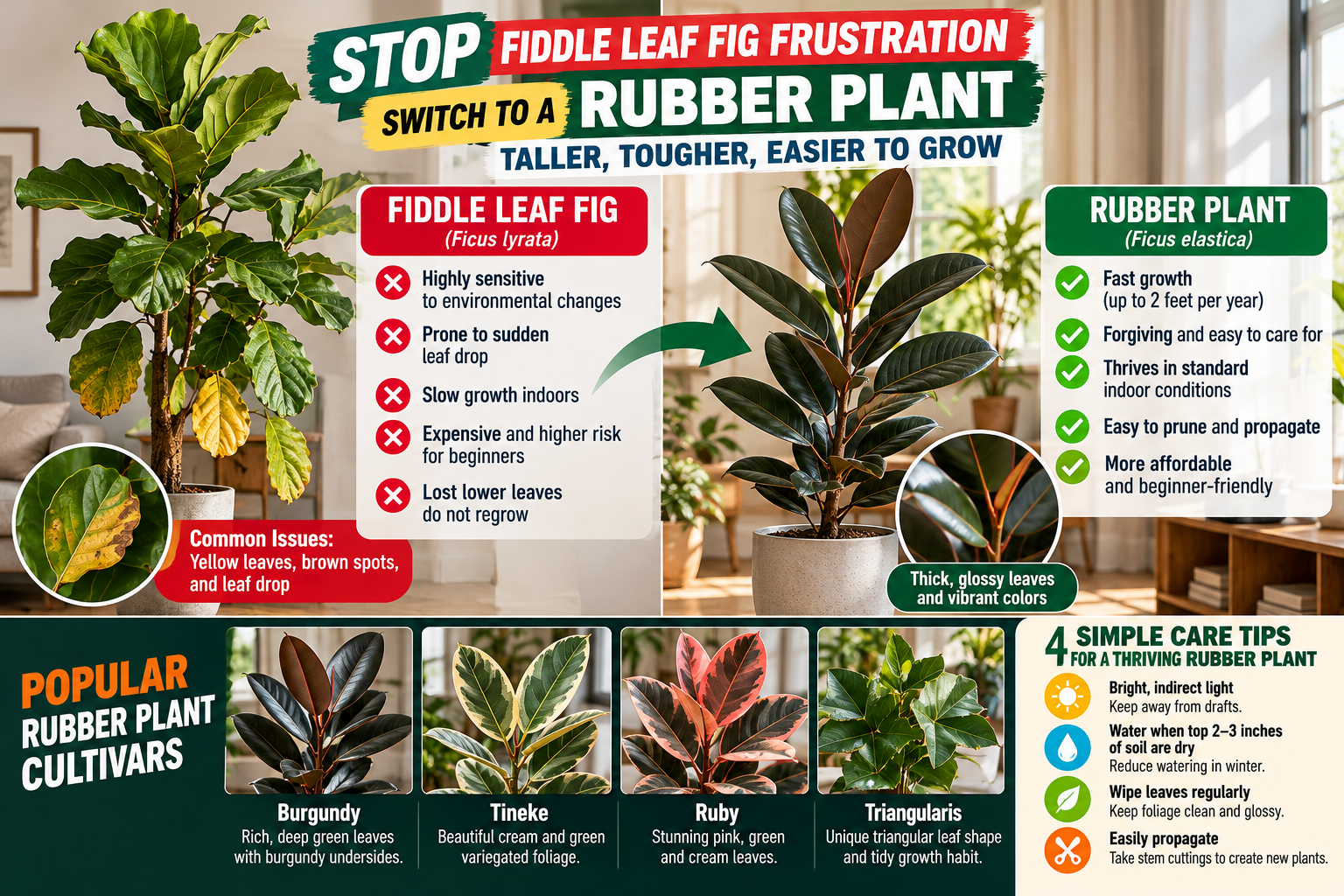
Bringing an imposing, lush indoor tree into your living room is one of the fastest ways to establish dramatic jungle aesthetics and architectural height. However, beginner plant owners and busy homeowners routinely encounter heart-breaking setbacks when purchasing high-maintenance tropical trees. The wildly popular Fiddle Leaf Fig (Ficus lyrata) is notorious for acting like a finicky diva. Under subtle environmental shifts, drafty windows, or slight watering missteps, a towering Fiddle Leaf Fig can drop its giant, lyre-shaped leaves overnight, turning an expensive centerpiece into an unsightly bare stick. Sourcing a resilient, fast-growing alternative that provides lush tropical height without constant anxiety remains a major goal for plant lovers.
Furthermore, spending significant money on large Fiddle Leaf specimens only to watch leaves yellow, develop brown patches, and drop permanently creates immense frustration for home gardeners.
Why Fiddle Leaf Figs Fail Beginners During Seasonal Transitions
Attempting to grow a Fiddle Leaf Fig without commercial greenhouse climate controls introduces severe cultural challenges:
-
High Sensitivity to Environmental Shock: Minor shifts in room temperature, drafts, or seasonal lighting changes trigger massive, sudden leaf drop.
-
Permanent Structural Defoliation: Once a Fiddle Leaf Fig drops its lower foliage due to stress or watering errors, new leaves will never regrow in those original stem locations.
-
High Financial Risk & Slow Recovery: Tall Fiddle Leaf specimens command premium prices at nurseries, making unexpected defoliation a costly gamble for novice growers.
Settling for fragile, temperamental indoor trees leads to wasted money, bare stems, and ongoing indoor gardening disappointment.
The Solution: Swap High-Risk Fiddle Leaf Figs for Forgiving Rubber Plants
The ultimate solution for achieving dramatic indoor height without high-maintenance stress is swapping the Fiddle Leaf Fig for its easygoing cousin, the Rubber Plant (Ficus elastica). Also belonging to the genus Ficus, the Rubber Plant is significantly faster-growing, far more forgiving of occasional neglect, and considerably more affordable. Capable of growing up to two feet per year in bright indirect light, Rubber Plants tolerate winter dryness and erratic watering schedules with ease.
Available in rich variegated cultivars—featuring cream, pink, burgundy, and yellow foliage—as well as unique leaf shapes like the triangular ‘Triangularis’, the Rubber Plant offers unmatched beginner success.
Technical Comparison: Rubber Plant vs. Fiddle Leaf Fig
| Technical Feature | Rubber Plant (Ficus elastica) | Fiddle Leaf Fig (Ficus lyrata) |
| Growth Rate & Vigour | Rapid growth (up to 2 feet per year indoors). | Moderate to slow indoor growth; sensitive to seasonal stalls. |
| Watering Tolerance | Highly forgiving; thrives on slight drought/neglect. | Extremely sensitive; over/underwatering causes leaf drops. |
| Environmental Resilience | High; adapts smoothly to standard indoor humidity. | Low; requires strict humidity, zero drafts, and constant light. |
| Foliage Recovery & Regrowth | Easy to prune & propagate from tip cuttings. | Lost lower leaves do not regrow on bare woody trunks. |
| Variety & Cultivar Diversity | High (‘Burgundy’, ‘Ruby’, ‘Tineke’, ‘Triangularis’). | Low; primarily standard green or dwarf ‘Bambino’ forms. |
| Budget & Investment Risk | Budget-friendly; high success rate for beginners. | Expensive; high financial risk for novice plant parents. |
4-Step Actionable Care Protocol for Thriving Rubber Plants
To ensure your Rubber Plant reaches towering indoor heights with minimal maintenance overhead, follow these four simple care steps:
-
Light & Placement: Position your Rubber Plant in a spot with bright, indirect sunlight. Keep it away from drafty doors or cold winter heating vents to prevent leaf stress.
-
Master the “Err on Neglect” Water Rule: Allow the top 2 to 3 inches of potting soil to dry out completely between waterings. In winter, reduce watering significantly, allowing the plant to rest.
-
Foliage Dusting for Photosynthesis: Wipe the broad, glossy leaves bi-weekly with a damp cloth to clear dust buildup, ensuring optimal light absorption and vibrant leaf color.
-
Propagate for Easy Backups: If stem tips grow too tall, simply snip top cuttings, root them in water or moist soil, and create brand-new plants to share with friends.
Elevate Your Indoor Jungle Today
Do not let high prices, fragile care demands, or bare stems ruin your indoor greenery journey. Choosing a resilient, fast-growing Rubber Plant over a finicky Fiddle Leaf Fig guarantees lush tropical height, forgiving maintenance, and effortless success year-round.
Transform your living room with a vibrant, low-stress Rubber Plant today.
Which Rubber Plant cultivar—classic ‘Burgundy’, variegated ‘Tineke’, or pink ‘Ruby’—best fits your home decor?