
















The Challenge of Maintaining Full Tropical Foliage Without Leggy Stems or Leaf Drop
Schefflera plants (Schefflera spp.), commonly known as umbrella plants or umbrella trees, are beloved tropical houseplants prized for their glossy, palmately compound leaves that radiate outward like the spokes of an umbrella. Whether displaying the grand green canopy of Schefflera actinophylla or the compact, creamy variegated patterns of Schefflera arboricola, these indoor trees add architectural elegance and tropical charm to home interiors. However, home growers frequently face frustrating care hurdles. Sudden environmental changes, cold drafts, or overwatering cause these tropical trees to shed their umbrella leaflets rapidly, turning a lush focal point into a bare, leggy stick. Sourcing a clear, repeatable care routine that keeps foliage dense, vibrant, and pest-free remains a primary goal for houseplant enthusiasts.
Furthermore, plant parents with curious cats or dogs must exercise caution, as all parts of the Schefflera plant contain insoluble calcium oxalate crystals that are mildly toxic to humans and severely toxic to pets if ingested.
Why Overwatering, Low Light, and Cold Drafts Ruin Umbrella Plants
Applying incorrect houseplant routines to light-loving Araliaceae family trees leads to severe growth bottlenecks:
-
Overwatering & Soggy Soil: Watering before the top layer of soil dries out suffocates the root system, triggering root rot, yellowing foliage, and rapid leaf drop.
-
Light Deprivation & Leggy Stems: Placing Schefflera in low-light corners causes stems to stretch awkwardly, lose structural density, and droop.
-
Cold Drafts & Temperature Shock: Exposing tropical umbrella plants to temperatures below 60°F or dry heating vents leads to immediate leaf shedding and severe stress.
Settling for soggy soil, dim corners, or unadjusted winter placement results in bare trunks, pest infestations, and unappealing indoor trees.
The Solution: Expert Care Protocols for Dense, Lush Schefflera Growth
The ultimate strategy for growing thriving umbrella plants lies in providing bright, indirect sunlight, planting in rich, acidic, well-draining potting soil, and maintaining temperatures consistently above 60°F (ideally between 65°F and 90°F). Native to tropical regions across Asia, Australia, and the Pacific Islands, these long-lived perennials can survive indoors for over 25 years when provided with proper moisture balance.
By feeding twice weekly during the active spring/summer growing season with liquid houseplant fertilizer, pruning leggy branches to encourage bushier growth, and propagating stem cuttings under plastic humidity tents, home growers can maintain vibrant, full-canopied indoor trees.
Breaking Down Popular Schefflera Varieties & Cultivars
-
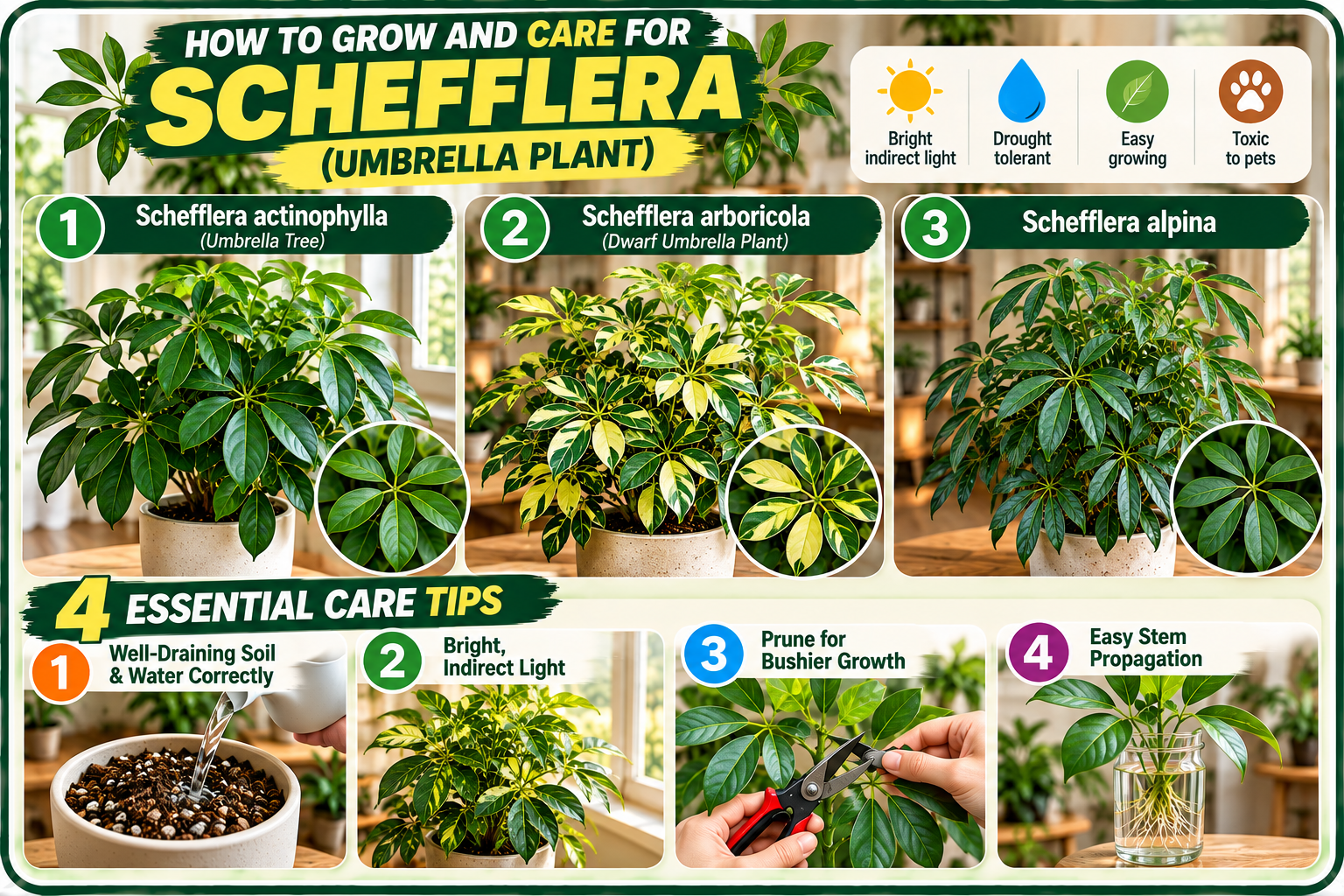
Schefflera Actinophylla (Umbrella Tree): Features long, shiny, oval green leaflets up to 10 inches long radiating from central stalks. Reaches 4 to 6 feet indoors (and up to 15 feet in high-ceiling spaces).
-
Schefflera Arboricola (Dwarf Umbrella Plant): A smaller, highly popular species featuring 1- to 2-inch leaflets that grow in tight, bushy clusters. Widely available in variegated cultivars with creamy yellow and white blotches.
-
Schefflera Alpina: A cold-tolerant mountain variety that can be grown as a small tree or shrub up to 6 feet tall, showcasing dark, glossy leaves with pointed leaflets.
4-Step Actionable Care, Pruning & Stem Propagation Protocol
To ensure your umbrella plant remains bushy, upright, and structurally sound, follow these four core care steps:
-
01. Well-Draining Soil & Deep Waterings: Plant in a rich, loose, acidic peaty potting mix. Water deeply only after the top inch or two of soil dries out completely, allowing excess water to drain fully out of bottom holes. Cut back on watering during winter months.
-
02. Strategic Indirect Sunlight: Position near a bright window that receives ample indirect sunlight. Avoid harsh direct sun, which can scorch leaf surfaces, and keep away from dark corners that induce legginess.
-
03. Pruning for Bushy Branching: Trim back overgrown or leggy stems during the spring growing season using sterile pruners. Cutting back tall stems prompts the plant to rebound quickly with denser, bushier side branching.
-
04. Step-by-Step Stem Propagation: Take a 6-inch stem cutting at a 45-degree angle in spring. Remove lower leaves, dip the cut end in rooting hormone, and plant in moist potting soil. Cover loosely with a clear plastic bag to lock in humidity, place in bright indirect light, and check for root establishment after several weeks.
Proven Indoor ROI Across Home & Office Spaces
Real-world application and expert care guidance confirm immediate practical benefits:
-
Long-Term Architectural Decor: Fast-growing indoor tree that provides towering tropical green height for over two decades.
-
High Environmental Resilience: Rebounds remarkably well from heavy pruning and adjusts comfortably to average indoor home humidity.
-
Effortless Multiplication: Yields brand-new indoor trees through straightforward spring stem cuttings and rooting protocols.
Elevate Your Indoor Plant Collection Today
Do not let overwatering, leggy growth, or cold drafts hold back your indoor garden. Choosing proven Schefflera varieties—supported by bright indirect light, rich well-draining acidic soil, and seasonal pruning—guarantees a full, vibrant umbrella canopy year after year.
Transform your living room or office space with a thriving umbrella plant today.
Which Schefflera variety—such as the classic large-leaf S. actinophylla or the compact variegated S. arboricola—best fits your home decor?