

























The Challenge of Maintaining Full Trailing Vines Without Leggy Stems or Root Rot
Pothos (Epipremnum aureum), widely known as Golden Pothos or Devil’s Ivy, is one of the most popular and versatile tropical vining houseplants in the world. Native to the Solomon Islands, this fast-growing indoor vine can extend 12 to 18 inches per month, producing heart-shaped leaves with striking variegated patterns in green, yellow, white, and cream. However, home gardeners and beginners routinely encounter frustrating care issues. Overwatering frequently leads to soggy soil, root rot, and yellowing leaves, while keeping variegated varieties in deep shade causes them to lose their vibrant markings and revert to solid green. Sourcing a repeatable care routine that keeps trailing vines bushy, full, and pest-free remains a primary goal for plant parents.
Furthermore, home growers with pets must exercise caution when placing pothos on low tables or coffee stands, as all parts of the plant contain insoluble calcium oxalate crystals that are toxic to dogs and cats if ingested.
Why Overwatering, Deep Shade, and Lack of Pruning Ruin Pothos Vines
Applying incorrect houseplant care habits to adaptable Araceae family vines leads to severe growth bottlenecks:
-
Soggy Soil & Root Rot Sugginess: Leaving pothos in wet potting soil for extended periods suffocates root systems, causing leaves to turn yellow and drop.
-
Deep Shade Variegation Loss: Keeping variegated cultivars (like Marble Queen or Pearls and Jade) in dark rooms strips away white and yellow patterning.
-
Leggy, Sparse Vines from Unpruned Growth: Allowing stems to grow endlessly without pruning results in long, bare vines with sparse leaf coverage near the crown.
Settling for soggy soil, unpruned bare stems, or dark corners leads to spindly growth, root rot, and unappealing indoor foliage.
The Solution: Expert Care Protocols for Rapid, Lush Pothos Growth
The ultimate strategy for growing thriving pothos plants lies in planting in well-draining potting soil, allowing the top 2 inches of soil to dry out completely between waterings, and providing bright, indirect sunlight. Thriving in temperatures between 65°F and 75°F, pothos adapts remarkably well to low-humidity rooms, fluorescent office lighting, and low-light apartment settings.
By executing seasonal stem pruning to encourage bushier growth near the crown, applying a balanced 3-1-2 ratio houseplant fertilizer monthly during spring and summer, and propagating stem cuttings in water, home growers can enjoy decades of cascading green beauty.
Breaking Down Popular Pothos Varieties & Hybrid Cultivars
-
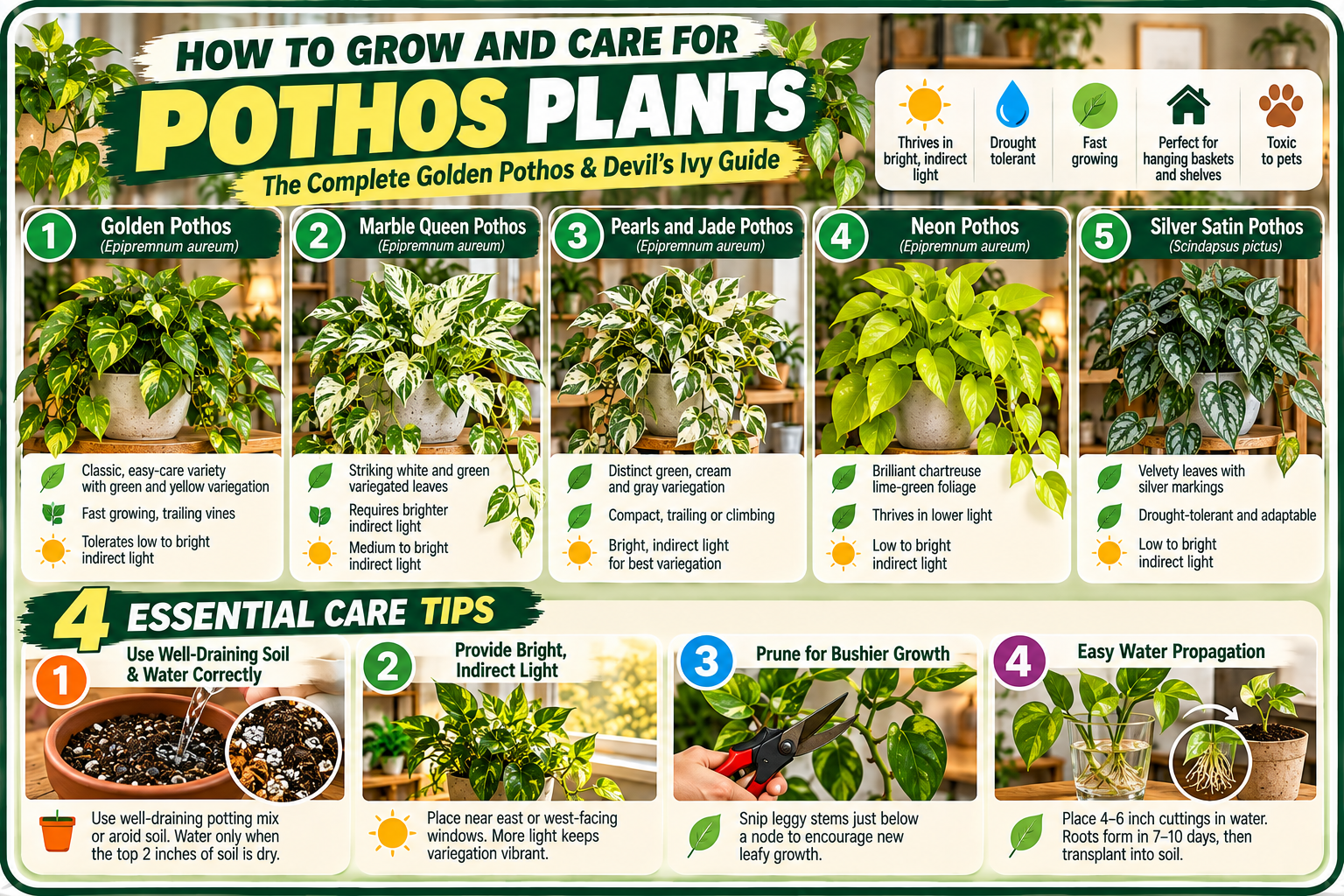
Golden Pothos (Epipremnum aureum): The classic, indestructible variety featuring heart-shaped green leaves splashed with warm yellow variegation.
-
Marble Queen Pothos: Highly sought-after varietal displaying an intricate, heavy white-and-green variegated marble pattern. Requires brighter indirect light to maintain leaf contrast.
-
Pearls and Jade Pothos: A compact climbing or trailing varietal featuring distinct bold gray, green, and cream patches around the leaf perimeters.
-
Neon Pothos: Displays brilliant chartreuse, bright lime-green foliage. Needs less light than variegated types, making it ideal for brightening dark room corners.
-
Silver Satin Pothos (Scindapsus pictus): Features thick, velvety gray-green leaves adorned with shimmering silver splotches. Highly drought-tolerant and adaptable to lower light.
4-Step Actionable Care, Pruning & Water Propagation Protocol
To ensure your pothos remains bushy, vibrant, and structurally healthy, follow these four core steps:
-
01. Well-Draining Soil & Dry-Out Water Rule: Plant in standard well-draining houseplant mix or coarse aroid soil. Water deeply only when the top 2-inch layer of soil is completely dry or when leaves begin to show slight droopiness.
-
02. Strategic Lighting & Variegation Control: Place in bright, indirect light near east- or west-facing windows for optimal leaf patterning. If leaves lose variegation and revert to solid green, move the pot closer to a brighter light source.
-
03. Strategic Pruning for Bushier Growth: Snip leggy stems using sterile pruners just below a leaf node during spring or summer. Cutting bare stems prompts new leafy growth points near the crown of the plant.
-
04. Effortless Water Propagation: Take 4-to-6-inch stem cuttings with at least 3 leaves. Strip the lowest leaf and submerge the cut end in a glass or vase of clean water. New roots will emerge within 7 to 10 days; transplant into soil once roots reach several inches long.

Proven Indoor ROI Across Home & Office Spaces
Real-world application and expert care guidance confirm immediate practical benefits:
-
Versatile Display Options: Looks stunning trailing down high bookshelves, spilling from hanging macramé baskets, or climbing up moss poles.
-
Beginner-Friendly Forgiveness: Extremely resilient nature withstands occasional missed waterings and fluctuating light conditions.
-
Endless Free Multiplication: Easily multiplies through quick water propagation to fill out thin pots or share rooted cuttings with friends.
Elevate Your Indoor Plant Collection Today
Do not let overwatering, bare leggy stems, or dark rooms prevent you from growing lush trailing greenery. Choosing proven pothos varieties—supported by proper soil drainage, bright indirect light, and easy water propagation—guarantees a vibrant, low-stress indoor jungle year after year.
Transform your home shelves, hanging baskets, or office desk with a thriving pothos vine today.
Which pothos variety—such as classic Golden Pothos, striking Marble Queen, or vibrant Neon—best complements your indoor plant setup?