























The Challenge of Maintaining Vibrant Succulent Blooms and Preventing Soft Stem Rot
Kalanchoe plants (Kalanchoe blossfeldiana), often known as Flaming Katy or Florist Kalanchoe, are celebrated for their thick, scallop-edged succulent leaves and dense, vibrant clusters of tiny flowers ranging from red, pink, and yellow to orange and white. However, home gardeners and indoor plant enthusiasts routinely run into frustrating setbacks. Overwatering frequently leads to soft, fragile stems and underground root rot, while improper lighting causes leggy growth, leaf scorch, or complete failure to rebloom after the initial flowers fade. Sourcing a clear, repeatable care strategy that balances drought resistance with long-lasting floral displays remains a primary goal for succulent growers.
Furthermore, introducing kalanchoes into homes with pets requires careful placement, as all plant parts contain cardiac glycosides that are toxic to cats and dogs if ingested.
Why Standard Houseplant Routines and Overwatering Fail Kalanchoes
Applying generic houseplant habits to drought-adapted Crassula family succulents creates severe cultural bottlenecks:
-
Dense Soil & Heavy Watering Sogginess: Standard potting soil retains excess water, suffocating succulent roots and triggering rapid, irreversible stem rot.
-
Lack of Dark Reset Periods: Kalanchoes require specific photoperiod signaling to produce flower buds; keeping them under constant indoor room lighting stops secondary bloom cycles.
-
Cold Drafts & Frost Exposure: Operating outside their ideal 55°F to 80°F temperature window causes soft, damaged leaves and stunted flower production.
Settling for soggy soil or improper light cycles leads to unblooming, leggy plants, root rot, and premature plant loss.
The Solution: Expert Care Protocols for Long-Lasting Kalanchoe Performance
The ultimate strategy for growing thriving kalanchoes lies in providing well-draining porous soil mixes (such as 50% potting soil and 50% cactus mix), allowing the root zone to dry out completely between waterings, and managing daily light cycles. Native to Madagascar, these resilient perennials thrive in bright, indirect sunlight indoors or partial shade outdoors in USDA hardiness zones 10 through 12.
By executing seasonal deadheading, monthly spring/summer balanced fertilizing, and triggering a six-week 14-hour daily darkness reset in autumn, growers can enjoy vibrant, multi-season flower shows year after year.
Breaking Down Core Kalanchoe Species & Varietal Care
-
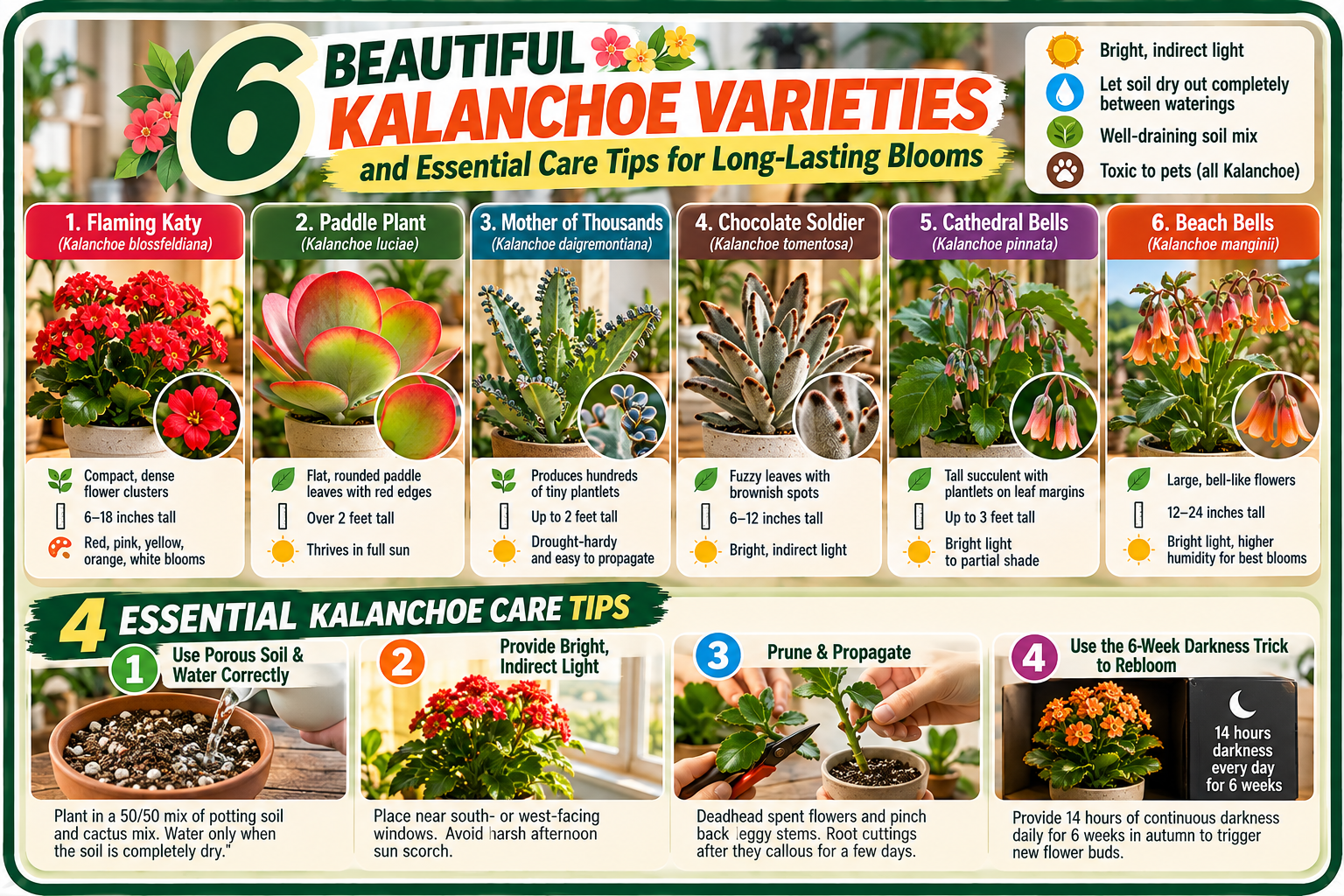
Kalanchoe Blossfeldiana (Flaming Katy): The most popular species, growing 6 to 18 inches tall with thick scalloped leaves and dense umbrella-like flower heads. Requires bright indirect light and complete soil dry-outs. Toxic to pets.
-
Paddle Plant (Kalanchoe luciae): Known for flat, rounded paddle-shaped leaves that turn vibrant red at the margins in winter. Grows over 2 feet tall and thrives in full sun.
-
Mother of Thousands (K. daigremontiana): Produces hundreds of tiny plantlets along its leaf margins that drop and root effortlessly. Highly prolific and drought-hardy.
-
Chocolate Soldier Plant (Kalanchoe tomentosa): A fuzzy, tactile species featuring thick felty leaves with brownish spots along the serrated edges.
-
Cathedral Bells (Kalanchoe pinnata): Tall succulent featuring fleshy green leaves that bear miniature plantlets along the leaf margins.
-
Beach Bells (Kalanchoe manginii): Features fleshy leaves and large, bell-like pendant flowers. Requires higher ambient humidity to set blooms compared to other species.

4-Step Actionable Protocol for Forcing Reblooms & Healthy Maintenance
To ensure your kalanchoe stays compact, disease-free, and blooms continually, follow these four core steps:
-
01. Porous Soil & Water Management: Plant in a porous 50/50 mix of potting soil and cactus mix (or 40% perlite). Water deeply only after the soil has dried out completely. Always use pots with drainage holes.
-
02. Optimal Lighting Placement: Position indoors in bright, indirect light near south- or west-facing windows. Outdoors, ensure partial shade to protect foliage from harsh late afternoon sun scorch.
-
03. Pruning & Offset Propagation: Pinch back leggy stem tips and deadhead spent flower clusters to encourage branching. Snip offsets or stem cuttings, allow the cut ends to callous for a few days, dip in rooting hormone, and plant in dry succulent mix.
-
04. The 6-Week Rebloom Dark Trick: To trigger new flower buds, give the plant 14 hours of continuous, unbroken darkness daily for 6 weeks during autumn (cover with a box or place in a dark closet overnight). Keep soil dry and refrain from fertilizing during this reset phase.

Proven Indoor & Outdoor ROI Across Home Settings
Real-world application and expert care guidance confirm immediate practical benefits:
-
Low-Maintenance Drought Tolerance: Perfect for busy schedules, needing water only every couple of weeks.
-
Multi-Year Flowering Longevity: Easily lives and reblooms for multiple years when given winter darkness reset periods.
-
Effortless Multiplication: Yields dozens of new free plants through stem cuttings and leaf offset propagation.
Elevate Your Indoor Succulent Collection Today
Do not let overwatering, dark rooms, or stalled reblooms prevent you from enjoying brilliant succulent flowers. Following proper porous soil mixing, bright indirect light placement, and the 14-hour darkness trick guarantees long-lasting, vibrant kalanchoe blooms year after year.
Transform your home windowsill or sunny patio with healthy, colorful kalanchoes today.
Which kalanchoe variety—such as the classic Flaming Katy or the fuzzy Chocolate Soldier—best complements your indoor plant collection?